Sunday, November 26, 2006

High court to hear global warming case

WASHINGTON (AP) — The Supreme Court hears arguments this week in a case that could determine whether the Bush administration must change course in how it deals with the threat of global warming.
A dozen states as well as environmental groups and large cities are trying to convince the court that the Environmental Protection Agency must regulate, as a matter of public health, the amount of carbon dioxide that comes from vehicles.

Carbon dioxide is produced when fossil fuels are burned. It is the principal "greenhouse" gas that many scientists believe is flowing into the atmosphere at an unprecedented rate, leading to a warming of the earth and widespread ecological changes.

The Bush administration intends to argue before the court on Wednesday that the EPA lacks the power under the Clean Air Act to regulate carbon dioxide as a pollutant. The agency contends that even if it did have such authority, it would have discretion under the law on how to address the problem without imposing emissions controls.

The states and more than a dozen environmental groups insist the 1970 law makes clear that carbon dioxide is a pollutant that is subject to regulation because its poses a threat to public health.

A sharply divided federal appeals court ruled in favor of the government in 2005. But last June, the Supreme Court decided to take up the case.

The ruling next year is expected to be one of the court's most important ever involving the environment.
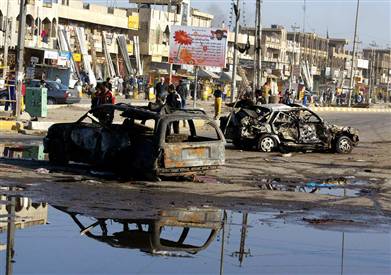
MICHAEL WARE, CNN CORRESPONDENT: Well, firstly, let me say, perhaps it's easier to deny that this is a civil war, when essentially you live in the most heavily fortified place in the country within the Green Zone, which is true of both the prime minister, the national security adviser for Iraq and, of course, the top U.S. military commanders. However, for the people living on the streets, for Iraqis in their homes, if this is not civil war, or a form of it, then they do not want to see what one really looks like.

This is what we're talking about. We're talking about Sunni neighborhoods shelling Shia neighborhoods, and Shia neighborhoods shelling back.

We're having Sunni communities dig fighting positions to protect their streets. We're seeing Sunni extremists plunging car bombs into heavily-populated Shia marketplaces. We're seeing institutionalized Shia death squads in legitimate police and national police commando uniforms going in, systematically, to Sunni homes in the middle of the night and dragging them out, never to be seen again.

I mean, if this is not civil war, where there is, on average, 40 to 50 tortured, mutilated, executed bodies showing up on the capital streets each morning, where we have thousands of unaccounted for dead bodies mounting up every month, and where the list of those who have simply disappeared for the sake of the fact that they have the wrong name, a name that is either Sunni or Shia, so much so that we have people getting dual identity cards, where parents cannot send their children to school, because they have to cross a sectarian line, then, goodness, me, I don't want to see what a civil war looks like either if this isn't one.
Sad Sunday: Iraq War Longer Than World War Two. JFK Was Right, George Bush Is Wrong

by Brent Budowsky

The tragic milestone has arrived, the Iraq War lasted longer than the Second World War, with the President telling us that many more days are left in his tragedy drenched in blood..

In 1957 Senator John F. Kennedy gave a major address opposing European colonial policies and the French colonial dominance of Algeria. JFK warned that these policies and practices gave aid, comfort and strength to Soviet communists who prayed on misery, exploitation and corruption.

Sound familiar?

One can reread JFK's speeches between 1957 and Algerian independence after he became President, and substitute "terrorists" for "Soviet communists." It is eerie. It is true. It is a hard lesson for President Bush and the country he so wrongly and disastrously pushed to war, through the politics of fear, and the obsession of ideology.

In a just world, President Bush will take this sad Sunday and apologize to the people of America and the people of Iraq, accept his responsibility, discuss what lessons he has learned, and move to set things right.

That is what JFK did after the Bay of Pigs; he accepted responsibility, grew from his mistakes, and saved the world from nuclear war when he removed the Soviet missiles from Cuba. That is what the President should do.

He will not. George W. Bush is no JFK, nor is he Reagan, nor is he George Herbert Walker Bush, nor is he even Nixon.

I have written here and elsewhere recently of John Fitzgerald Kennedy and Robert Kennedy and would simply state again that what America needs, what the world needs, is the kind of aspirational leadership that Jack and Bobby provided.

It is a time, on this sad Sunday, to revisit Jack Kennedy's criticism of European colonialism in the Third World during the 1950's. George W. Bush speaks of democracy but his war policy is the lineal descendant of the colonial practices that John Kennedy so wisely spoke against.

It was not democracy to seek to install Mr. Chalabi as leader of Iraq after an American invasion. Mr. Chalabi's relationship to freedom and democracy in Iraq was zero. He would have been a leader in Iraq with no support within Iraq, installed by Americans, with the result that would only help the Iranian mullahs.

It was not democracy to raise false fears to drive America to war and spy on Americans who opposed those policies.

It was not democracy to establish an Iraq Reconstruction Authority that was run by an American with the attitude of a Roman Proconsul.

It was not democracy to install political hacks in key reconstruction positions, then allow some of the greatest greed, corruption and incompetence in the history of capitalism.

It was not democracy to steal and waste money that was meant to build hospitals and schools, so some made fortunes, while troops gave their lives and Iraqis suffered unendurable misery.

It was not democracy to peddle lies to promote fear to push for war that corrupted even the front page of the New York Times. It was not democracy to promote propaganda to peddle war that corrupted the intolerant editorial pages of the Washington Post. Nor was it democracy to accuse newspapers of treason when they belatedly printed truth.

It was not democracy to have a Vice President almost universally seen as the free world's leading advocate for torture. It was not democracy to try to keep this torture secret.

It was not democracy force out the Chief of Staff of the Army for daring to speak the truth and it was not democracy to force out the Navy lawyer who won a historic case for justice before the United States Supreme Court.

It was not democracy to hold secret White House meetings with oil company lobbyists where insiders passed around maps of Iraqi oil fields.

This whole project of an invasion, to install an American-imposed shill who only helped Iranians,to install a Proconsul-like American over the people of Iraq, to surround him with corrupt henchmen and cronies who misused money intended for schools and hospitals to help the children and suffering of Iraq was not democracy.

It was rooted in the colonial abuses and executed with the same catastrophic results.

JFK warned about this in the 1950's; saying correctly such practices only helped communist enemies and George Bush was warned about his policies that would only help our enemies in Iraq, Iran.Al Qaeda and elsewhere.

It is time to bring back the American foreign and security policies of John and Robert Kennedy rooted in American purpose and aspirational ideals that offer the hope of a better life, not endless war.

It is time for the United States to once again offer comprehensive plans for peace in the Middle East, a subject I will return to soon, while we rebuil the military from the damage that these catastrophic policies caused.

It is time to recognize that the Project for the New American Century was deadly wrong, catastrophically wrong, historically wrong. The world does not want endless preemptive wars, occupations, proconsuls, and shills surrounded by crony corruption.

Now we know: at this sad time the war in Iraq is longer than the Second World War, so:

On the matter of George W. Bush, Richard B. Cheney, neoconservative fantasists and their partisans and profiteers we should throw out the baby, throw out the bathwater, and throw out whole damn thing.

We should say with finality: George W. Bush was wrong, and John F. Kennedy was right.
Midterm Elections Show Voting Flaws: Voters In 25 States Had “Serious Problems”...

Saturday, November 25, 2006

U.S. Retreat from Iraq? The Secret Story
by Tom Hayden


According to credible Iraqi sources in London and Amman, a secret story of America's diplomatic exit strategy from Iraq is rapidly unfolding. The key events include:

First, James Baker told one of Saddam Hussein's lawyers that Tariq Aziz, former deputy prime minister, would be released from detention by the end of this year, in hope that he will negotiate with the US on behalf of the Baath Party leadership.

The discussion recently took place in Amman, according to the Iraqi paper al-Quds al-Arabi.

Second, Secretary of State Condoleeza Rice personally appealed to the Gulf Cooperation Council in October to serve as intermediaries between the US and armed Sunni resistance groups [not including al Qaeda], communicating a US willingness to negotiate with them at any time or place. Speaking in early October, Rice joked that if then-Secretary of Defense Donald Rumsfeld "heard me now, he would wage a war on me fiercer and hotter than he waged on Iraq," according to an Arab diplomat privy to the closed session.

Third, there was an "unprecedented" secret meeting of high-level Americans and representatives of "a primary component of the Iraqi resistance" two weeks ago, lasting for three days. As a result, the Iraqis agreed to return to the talks in the next two weeks with a response for the American side, according to Jordanian press leaks and al-Quds al-Arabi.

Fourth, detailed email transmissions dated November 16 reveal an active American effort behind the scenes to broker a peace agreement with Iraqi resistance leaders, a plot that could include a political coup against Prime Minister Nuri al-Maliki.

Fifth, Bush security adviser Stephen Hadley carried a six-point message for Iraqi officials on his recent trip to Baghdad:

-include Iraqi resistance and opposition leaders in any initiative towards national reconciliation;general amnesty for the armed resistance fighters;

-dissolve the Iraqi commission charged with banning the Baath Party;

-start the disbanding of militias and death squads;

-cancel any federalism proposal to divide Iraq into three regions, and combine central authority for the central government with greater self-rule for local governors;

-distribute oil revenues in a fair manner to all Iraqis, including the Sunnis whose regions lack the resource.


Prime Minister Al-Maliki was unable to accept the American proposals because of his institutional allegiance to Shiite parties who believe their historic moment has arrived after one thousand years of Sunni domination. That Shiite refusal has accelerated secret American efforts to pressure, re-organize, or remove the elected al-Maliki regime from power.

The Backstory

Underlying these developments are three American concerns: first, the deepening quagmire and sectarian strife on the battlefield; second, the mid-year American elections in which voters repudiated the war; and third, the strategic concern that the new Iraq has slipped into the orbit of Iran. It remains to be seen if Iran will exercise influence on its Shiite allies in Iraq (the Grand Ayatollah Sistani was born in Iraq, and the main Shiite bloc was created in Iran by Iraqi exiles). But that is the direction being taken by Baker's Iraq Study Group and former CIA director John Deutch in a New York Times op-ed. The principal US track, in addition to a declared withdrawal plan, should be to work towards a hands-off policy by Iran, at least for an interval, according to Deutch.

This possible endgame has been in the making for some time. Even two years ago, US officials were probing contacts with Iraqi resistance groups distinct from al-Qaeda. Recent polls indicate sixty percent Iraqi support for armed resistance against the United States, while approximately eighty percent of Iraqis support some timetable for withdrawal, an indispensable indicator for Iraqi insurgents laying down some arms.

Even before the 2003 US invasion, peace groups like Global Exchange and the newly-forming Code Pink sent delegations to create people-to-people relations with Iraqi opponents of the occupation and members of civil society. This writer met with Iraqi exiles in London, who suggested further meetings in Amman. Those contacts were facilitated in 2005 by a former Jordanian diplomat, Munther Haddadin, who supported open-ended discussions with Iraqis in exile, Jordan's Crown Prince Hassan, and with intermediaries from the insurgency who made the dangerous 15-hour drive from Baghdad to Amman on more than one occasion. A reporter for the San Francisco Chronicle, Rob Collier, also interviewed Iraqi insurgents and was helpful in providing contacts.

Earlier this year, an American peace delegation, including Cindy Sheehan, found themselves in two days of meetings with Iraqis of every political stripe. US Congressman Jim McDermott (D-WA) was crucial in making these contacts by his persistent efforts at mid-east dialogue. Dal LaMagna, a self-described "frustrated peacemaker" made both trips to Amman, and provided this writer with videos and transcripts of the interviews on which this article is based.

It must be emphasized that there is no reason to believe that these US gestures are anything more than probes, in the historic spirit of divide-and-conquer, before escalating the Iraq war in a Baghdad offensive. Denial plausibility - aka Machiavellian secrecy - remains American security policy, for understandable if undemocratic reasons.

Yet Americans who voted in the November election because of a deep belief that a change of government in Washington might end the war have a right to know that their votes counted. The US has not abandoned its entire strategy in Iraq, but is offering significant concessions without its own citizens knowing.


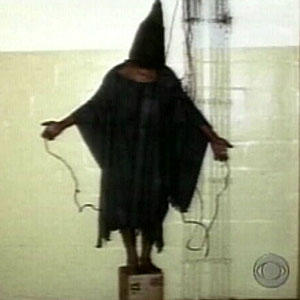
Rumsfeld okayed abuses says former U.S. general

Friday, November 24, 2006


Iraq spirals deeper into sectarian war
What’s 20,000 More Troops Going to Accomplish?

By Matthew Rothschild

There’s a certain amount of insanity surrounding the talk about sending 20,000 more U.S. troops to Iraq.

We already have 144,000 troops there.

There are about 20,000 mercenaries—I’m sorry, I mean contractors—there.

And about 7,000 British troops.

That’s 171,000 total.

How’s adding another 12% going to be decisive?

Iraq is falling apart, and 20,000 additional troops can’t put it back together again.

In October, a record number of Iraqis—3,709—were killed. With a vicious cycle of sectarian violence on top of the insurgency, the idea that 20,000 more troops can do much of anything is deluded.

And what’s all this talk about making a “final push”?

As Rahul Mahajan, author of Full Spectrum Dominance, recently noted, waging war in Iraq is not like storming Stalingrad.

This is not conventional warfare; it’s not even a conventional insurgency or your traditional civil war.

It’s a mutant organism: part religious civil war, part blood feud, part intra-ethnic jockeying, part homegrown insurgency, plus a foreign jihad all rolled into one.

So who are the U.S. troops going to be protecting? The Iraqi government?

But it’s not a government, in any real sense of the world, as Mahajan noted in a talk November 16. The government itself is made up of many factions, with their own militias, which have infiltrated the army and the police. By aiding the army and police by day, the United States ends up aiding some of those militias by night.

There is no large number of Iraqi policemen or troops that puts loyalty to the nation above parochial allegiances.

Now the United States says it wants more U.S. trainers. But as Thomas E. Ricks notes in The Washington Post on November 21, “The U.S. military’s effort to train Iraqi forces has been rife with problems, from officers being sent in with poor preparation to a lack of basic necessities such as interpreters and office materials.”

Finding good interpreters may be harder than you think. “They couldn’t speak English,” one lieutenant colonel told Ricks. Those who can are in shorter and shorter supply.

Because they’re being killed off.

“Iraqi interpreters working with the British army in Basra are being hunted down and killed, according to the Iraqi police,” Phil Sands reported for the San Francisco Chronicle on November 20. “At least 21 have been kidnapped and shot in the head over the last month.” This, after getting letters warning them not to cooperate with the occupation.

And that’s in the south of Iraq, where things are supposed to be going well.

The United States is in a no-win situation in Iraq. The American people realize that. We must now pressure our political leaders to wake up, face facts, and withdraw.

Adding 20,000 more U.S. troops will not solve anything.

But it will have one effect.

More U.S. troops will die.
Pelosi's compulsion

The speaker-elect should avoid embarrassment -- and honor her promise to clean up Congress -- and not pick compromised Alcee Hastings as intelligence chairman.

By Joe Conason

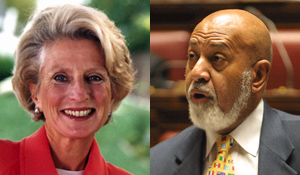
Whatever urge impels Nancy Pelosi to consider replacing Jane Harman with Alcee Hastings as chairman of the House Permanent Select Committee on Intelligence must be extraordinarily powerful. Some say that Speaker-elect Pelosi harbors a personal grudge against her fellow Californian; some say that she feels Harman has been too accommodating to the White House and Republicans as the ranking Democrat on the committee, known as HPSCI (or "hip-see").

Yet neither of those motives seems sufficient to explain why Pelosi would choose to pass over Harman in favor of Hastings, whose elevation can only cause the most severe embarrassment to the speaker-elect and the Democrats she leads. It won't be easy for them to justify entrusting a position of such enormous sensitivity to someone whom Pelosi -- and many of her Democratic colleagues -- once voted to impeach and remove from the federal bench as a corrupt perjurer.

In 1988, the House approved 17 articles of impeachment against Hastings, who was then a federal district judge sitting in the Southern District of Florida. The congressional impeachment stemmed from his unsuccessful 1981 federal prosecution on charges that a lawyer named William Borders had solicited a $150,000 bribe on his behalf from Frank and Thomas Romano, two brothers convicted of racketeering whose sentencing came before Hastings. Borders, a longtime Hastings friend and a prominent African-American attorney, was found guilty and sent to prison.

Although a Miami jury acquitted Hastings of the bribery, despite much circumstantial evidence of his guilt, outraged judges in the 11th Circuit initiated disciplinary proceedings against him. They commissioned a special report on the Hastings case by former assistant attorney general John Doar, who found substantial evidence of his participation in the bribery scheme with Borders as well as reason to believe that he had subsequently lied under oath at his trial.

Hastings has always insisted that he was the innocent victim of a scheme by Borders to profit from the misuse of his name. When Borders was apprehended by an FBI undercover operation in Washington, however, Hastings abruptly fled town before the agents could question him. Over the past two decades, Borders has gone to jail twice on contempt charges rather than testify to the innocence of his friend Hastings.

The Doar report convinced members of the House Judiciary Committee -- then controlled by Democrats and chaired by John Conyers, D-Mich., who is now set to chair the committee again -- to begin the impeachment process. Their decision was historic because Hastings was the first African-American federal judge in Florida, and only the sixth judge ever to be impeached by Congress. The committee unanimously referred to the full House the 17 specific articles against him, which were then ratified on the House floor by a vote of 413-3. Conyers led the special committee of impeachment managers who prosecuted Hastings in the Senate, where they won his conviction and removal. Of the 17 counts, he was convicted on nine and acquitted on two, and the Senate didn't vote on six; each conviction required a two-thirds vote.

That stinging disgrace didn't prevent Hastings from running several years later for a congressional seat in Miami, which he has held ever since. Nobody seems to have noticed, until now, that he has been sitting on the Intelligence Committee long enough to become its second-ranking Democrat. Perhaps that's because his service on the committee has been neither noteworthy nor distinguished. The only reason to award him the chairmanship would be that he has been there a long time -- and that he isn't Harman.

As for Harman, she faces a significant handicap aside from the enmity of the new speaker and her alleged coziness with Republicans. She is reportedly the subject of a federal investigation concerning her relationship with the powerful lobbyists at the American Israel Public Affairs Committee. In a probe that grew out of the Larry Franklin espionage case, Harman is alleged to have promised to seek leniency for two AIPAC officials in exchange for the powerful lobby's support of her bid for the HPSCI chair. She vehemently denies that accusation.

No doubt Pelosi understands that she, the Congressional Black Caucus and the new Democratic Congress will hear mocking laughter from all sides if they turn HPSCI over to Hastings. They may mumble about the possibility that the FBI crime lab compromised the evidence against him, or claim that they now worry about the fairness of his impeachment trial. Weighed against their own votes to impeach and convict him, and against their promises to clean up the corrupt Congress, those claims will count for nothing. The chairmanship of a select committee is not an entitlement, and grave doubts about the integrity of Hastings should disqualify him.

Fortunately, the choice is not limited to Hastings or Harman. Among the possible alternatives is Rush Holt, D-N.J., a physicist and former State Department intelligence officer who is not only highly qualified to chair HPSCI but also has served on the committee with distinction. His honesty has never been questioned. For this job, above all others, Pelosi should honor her campaign promises and choose the best.

The Odd Attack on Dean
The Editors James Carville's bizarre attack on Howard Dean exposed an explosive battle for control between Clintonistas-in-waiting and advocates of renewal. This is a good fight to have.


Can We Feed the World? Absolutely
John Nichols It's possible, if we recognize that hunger is largely a political issue.

Thursday, November 23, 2006

A Growing Plea for Mercy for the Mentally Ill on Death Row - New York Times
The New York Times

--------------------------------------------------------------------------------
November 23, 2006
A Growing Plea for Mercy for the Mentally Ill on Death Row
By
RALPH BLUMENTHAL

LIVINGSTON, Tex. - Scott Louis Panetti says he was drowned and electrocuted
as a child and that he was recently stabbed in the eye in his death row cell
by the devil. Mr. Panetti says he has wounds that were inflicted by demons
and healed by President
John F. Kennedy.

"The devil has been trying to rub me out to keep me from preaching," Mr.
Panetti, explaining why he faces execution, said in an interview from behind
thick
glass in the Polunsky Unit here in East Texas, where condemned prisoners are
held before transfer to the death house 45 miles west in Huntsville.

Despite Mr. Panetti's obvious mental illness - he was a mental patient long
before he gunned down his in-laws in 1992 - he served as his own lawyer at
his
murder trial, throwing the courtroom into chaos with frequent gibberish. Now
the hyperactive and gangling Mr. Panetti, 48, has become an illustration of
the growing quandary over the application of a 1986 Supreme Court decision
barring execution of the insane.

The ruling appears to be limited to those without the capacity to understand
that they are about to be put to death and why. Whether Mr. Panetti fits
that
definition is a matter of dispute.

In an appeal to the Supreme Court that could affect the cases of other
mentally ill prisoners awaiting execution, Mr. Panetti's lawyers argue that
while
he has a "factual awareness" of his execution, he has a "delusional belief"
that it is unconnected to his crime, and that he should therefore be spared
lethal injection.

The case of another mentally ill death row inmate, Guy T. LeGrande, who
represented himself and is scheduled to die Dec. 1 in Raleigh, N.C., is
going through
its final state appeals, with his lawyers arguing that he, too, is
delusional, and that he hastened his execution by abandoning his defense.

Charged in the contract killing of a woman whose husband pleaded guilty to
plotting the murder and is serving life, Mr. LeGrande, 47, says he is
innocent
and was framed. He appeared in court in 1996 in a Superman T-shirt, cursed
the jurors as "Antichrists" and taunted them, "Pull the switch and let the
good
times roll." They took less than an hour to sentence him to death.

Experts and advocates in the field say the issue of executing the mentally
ill is the next frontier in death penalty law.

"This is an emerging issue," said Richard C. Dieter, executive director of
the Death Penalty Information Center, a research institute in Washington
that
opposes capital punishment.

Mr. Dieter cited the Panetti and LeGrande cases as gray areas in which "the
death penalty may be extreme punishment given their reduced culpability."

Franklin E. Zimring, a professor of law at the
University of California
, Berkeley, and author of "The Contradictions of American Capital
Punishment" (Oxford University Press, 2003), said there was something
"indigestible" about
these cases.

"We assume people don't want to die," Mr. Zimring said. "But these are
defendants that call the legal system's bluff."

Concern over execution of the mentally disabled prompted the
American Bar Association
last August to join a widening chorus of professionals calling for a halt
to death sentences and executions for defendants with severe mental
disorders
that "significantly impaired" their rational judgment or capacity to
appreciate the wrongfulness of their conduct. The moratorium was endorsed
earlier
by the
American Psychiatric Association
, the American Psychological Association and the National Alliance on Mental
Illness.

The groups also opposed death sentences for prisoners with mental disorders
that impaired their ability to assist their lawyers and make rational
decisions
on their appeals. The Supreme Court has already barred execution for the
mentally retarded and for juveniles.

"An increasing percentage of people executed are people giving up their
appeals," said Ronald J. Tabak, a lawyer at the firm Skadden, Arps, Slate,
Meagher
& Flom in Manhattan and a specialist in capital cases who led the bar
association's death penalty task force. "And of these, a significant
percentage have
serious mental illness."

The Supreme Court's 1986 ruling, on a Florida case, Ford v. Wainwright, left
much unclear. Although no state permitted execution of the insane, the
justices
affirmed that the Eighth Amendment against cruel and unusual punishment
prohibited it. But they did not provide a standard for determining when
someone
was competent enough to be executed.

In a concurring opinion later adopted as law by lower courts, Justice Lewis
F. Powell Jr. said it was enough "if the defendant perceives the connection
between his crime and the punishment." Justice Powell also said that the
Constitution "forbids the execution only of those who are unaware of the
punishment
they are about to suffer and why they are to suffer it."

The United States Court of Appeals for the Fifth Circuit found that Mr.
Panetti had the requisite legal awareness. And the Texas attorney general,
Greg
Abbott, has argued that the execution, as yet unscheduled after having been
postponed in 2004, should proceed.

There is no dispute that Mr. Panetti is "profoundly mentally ill," his
lawyers Gregory W. Wiercioch, Keith S. Hampton and Michael C. Gross said in
a petition
seeking to overturn the Fifth Circuit ruling. In the decade before the
murders, they said, he was hospitalized 14 times in six institutions for
schizophrenia,
manic depression, auditory hallucinations and delusions of persecution.
Believing the devil was in his furniture, he buried it in the backyard, and
thinking
the devil was in the walls, he hallucinated that they were running with
blood.

On Sept. 8, 1992, Mr. Panetti, dressed in military fatigues and carrying a
sawed-off shotgun, a rifle and knives, invaded the Fredericksburg home where
his estranged wife, Sonja Alvarado, had taken refuge with her parents, Joe
and Amanda Alvarado. In front of his wife and their 3-year-old daughter,
known
as Birdie, he shot the Alvarados to death and took his wife and daughter
captive before releasing them unharmed and surrendering.

In 1994, a first jury deadlocked on his mental competency, but a second
found him able to stand trial.

Waiving legal counsel, Mr. Panetti represented himself, appearing in court
in cowboy garb and seeking to subpoena Jesus before deciding "he doesn't
need
a subpoena - he's right here with me." He attributed the killings to an
alter ego named Sarge Ironhorse and, testifying in Sarge's voice after
calling
himself as a witness, recounted the killings:

"Sarge is gone. No more Sarge. Sonja and Birdie. Birdie and Sonja. Joe,
Amanda lying kitchen, here, there blood. No, leave. Scott, remember exactly
what
Sarge did. Shot the lock. Walked in the kitchen. Sonja, where's Birdie?
Sonja here. Joe, bayonet, door, Amanda. Boom, boom, blood, blood. Demons.
Ha, ha,
ha, ha, oh, lord, oh, you."

When Judge Stephen B. Ables tried to cut him off, Mr. Panetti said, "You
puppet."

Mr. Panetti does appear to have moments of lucidity, and these disconcerted
the juries at his competency hearing and trial, planting suspicions that he
might have been faking.

"Not to make excuses," he said in the death row interview, "but when someone's
insane, they're insane."

Psychiatrists testified that schizophrenic patients often spoke
intelligently.

Asked in the interview if he understood he was on death row for crimes he
committed, Mr. Panetti said: "Certainly not. They are in a strong
delusionment.
They'll be undeceived by delusionment."

Copyright 2006
The New York Times Company

Posted by Miriam V.

Happy Thanksgiving!

Wednesday, November 22, 2006

>>In Honor of Stupidity . . .
>>In case you needed further proof that the human race is doomed through
>>stupidity, here are some actual label instructions on consumer
>>goods.......
>>
>>
>>On Tesco's Tiramisu dessert (printed on bottom) -- "Do not turn upside
>>down."
>>(well...duh, a bit late, huh!)
>>
>>==========================
>>

>>On Sainsbury's peanuts -- "Warning: contains nuts."
>>(talk about a news flash)
>>
>>===========================

>>On Boot's Children Cough Medicine -- "Do not drive a car or operate
>>machinery after taking this medication."
>>(We could do a lot to reduce the rate of construction accidents if we
>>could just get those 5 year-olds with head-colds off those bulldozers.)
>>
>>==========================
>>

>>On Marks &Spencer Bread Pudding -- "Product will be hot after heating."
>>(...and you thought????...)
>>
>>=======================

>>On a Sears hairdryer -- Do not use while sleeping.
>>(That's the only time I have to work on my hair.)
>>
>>====================================
>>

>>On a bag of Fritos -- You could be a winner! No purchase necessary.
>>Details inside.
>>(the shoplifter special?)
>>
>>===========================
>>

>>On a bar of Dial soap -- "Directions: Use like regular soap."
>>(and that would be???....)
>>
>>============================
>>

>>
>>On some Swanson frozen dinners -- "Serving suggestion: Defrost."
>>(but, it's only a suggestion.)
>>
>>========================
>>
>>>>On packaging for a Rowenta iron -- "Do not iron clothes on body."
>>(but wouldn't this save me time?)
>>
>>==============================
>>
>>On Nytol Sleep Aid -- "Warning: May cause drowsiness."
>>(..I'm taking this because???....)
>>
>>==============================
>>

>>On most brands of Christmas lights -- "For indoor or outdoor use only."
>>(as opposed to what?)
>>
>>==========================

>>On a Japanese food processor -- "Not to be used for the other use."
>>(now, somebody out there, help me on this. I'm a bit curious.)
>>
>>==============================
>>

>>On an American Airlines packet of nuts -- "Instructions: Open packet, eat
>>nuts."
>>(Step 3: say what?)
>>
>>===========================

>>On a child's Superman costume -- "Wearing of this garment does not enable
>>you to fly."
>>(I don't blame the company. I blame the parents for this one.)
>>
>>========================

>>On a Swedish chainsaw -- "Do not attempt to stop chain with your hands or
>>genitals."
>>(Oh my God..was there a lot of this happening somewhere?)
>>
>>===========================
Posted by Miriam V.

Stupidity, Ignorance, Lies, Myths, Panic & Fear
by Larry Beinhart

George Bush went to Vietnam. He was asked how that war compared to this war and his answer was, "We'll succeed unless we quit."

It is time to get serious about the history of the war in Vietnam. The failure to do so is part of what permits idiocies like this war.


The great myth, and it's clearly the myth that George Bush believes, is that the US lost the war in Vietnam because liberals, Hollywood actresses, hippies and CBS News subverted our will to fight.

That's not true.

We lost the war in Vietnam because we were fighting for something we could not achieve.

We were fighting to convince the Vietnamese to accept a variety of Western backed dictators, crooks, and cowboy colonels as their leaders. We were opposed by an idealistic, disciplined, organized and relative uncorrupt movement with a charismatic leader.

That was our goal in the conflict. It's not the reason we went to war.

We went to war because of a mythology.

It was a mythology very like the one that George Bush has created as the context for the War in Iraq.

Back then, we saw the world in bi-polar terms. The Free World vs. Communism.

Because the world was bi-polar we had to count anyone who was anti-Communist as good and support them. So dictators and juntas and mini-fascists all over the globe got to be counted as members of the Free World.

It also meant that all Communists had to be the enemy, and, indeed were part of a world that was united against. Any step forward for any one of them was a loss for us in the overall war.

It was clear that Vietnam could never invade the United States. They were no direct threat to us. Indeed, Ho Chi Minh expressed a great deal of admiration for the United States and offered friendship.

But we had to stop South Vietnam from going Communist because if we didn't lots of bad things would happen. All of South East Asia would fall like dominoes. After that, Indonesia, the Phillipines, Australia, India, and soon we would be surrounded and alone.

So we went to war. We fought for ten years. 58,000 Americans died.153,000 were wounded. At least 1,000,000 Vietnamese died.

Then we withdrew.

What happened? Was the vast Communist bloc strengthened?

Not exactly. Within five years, China went to war with Vietnam.

It was fairly short war. Vietnam won.

Meantime, Cambodia had been taken over by the Khmer Rouge. They were communists too, but too extreme for the Vietnamese. So Vietnam invaded Cambodia to get rid of Pol Pot and his madmen. That went on for nine years.

We continued to treat Vietnam as a pariah nation for twenty years.

Finally in 1995 we 'normalized relations.'

When George Bush got there in 2006 he found a Communist country. But a friendly one. Willing to do business. A great tourist destination.

In short, what he found, was what we could have had for the asking back in 1961. Or in 1947 for that matter.

It's easy to say that's 20-20 hindsight.

Could that have been known before we went to war in Vietnam?

The answer is that, yes, it could.

Was that known to the people in power, before we went to war? Or, if not then, early in the course of the war?

The answer to that is also yes.

Not, perhaps, with absolute certainty, but certainly it was known.

So why do we go ahead? Why were we trapped in the myths?

Fear.

Not fear of communism. The fear on the part of our politicians of being called, "soft on Communism."

Both Kennedy and Johnson, at least at times, knew we couldn't win. Yet said they were afraid to be a president who "lost Vietnam." Then Richard Nixon came into power and lost Vietnam.

Nixon never got blamed for it. That's because he sort of owned the "soft on communism" franchise and he wasn't about to use it on himself.

Is this an argument that somehow we should not have fought Communism then and we should not fight terrorism or Islamo-fascism now or whatever else threatens us in the future?

No, it's not.

Actually, there were many places where we stood up to, subverted, or acted against the communists where we were very successful. And those countries are almost certainly better off for it.

Yet here's a real oddity. There are only five countries that remain Communist today: Vietnam, Laos, North Korea, Cuba and China.

We fought wars in the first three.

We should divide the Korean into two parts, two separate wars even. In the first part the North invaded the South and we entered the war to repel the invasion. That was very successful. In the second part, we invaded the North to make the whole country non-Communist. That was a great failure.

We backed an invasion of Cuba, we attempted numerous assassinations, and we have it embargoed to this day.

As for China, we backed the Nationalists against the Reds. Then we defended Taiwan (a success story) and tried to keep Red China isolated and ostracized.

Roughly speaking, the countries we fought the hardest are the ones that remain Communist today.

People will unite against a common enemy. Left to their own devices, they will, slowly, begin to question what's wrong with themselves.

The next lesson is this. Even if we agree to think of the War on Terror as something like the Cold War, we still have to think of the various battles one at a time. They are separate events and require separate responses.

The threat of force, as a deterrent, is extremely useful.

Actual force, going to war, is extremely good for repelling an invader and restoring a regime. It worked in South Korea. It worked when Saddam invaded Kuwait.

But actual force has it's limits. It's very dangerous to invade a country.

It can be done. But only if there's a viable replacement and we can get in and get out, as we did in Panama and Grenada.

But if we have to stay and put in or prop up a regime and become an occupying power, then it's a disaster.

But if there isn't one, it's Vietnam. Or Iraq.

There, very briefly, are some of the lessons that George Bush should have learned by comparing the two. The strictly practical ones, this does not address moral or legal issues.

Since he failed, the media which surrounds him should have done the job and pointed it out to us. Particularly since he failed. They were skeptical of him. They raised their eyebrows. Some even said quagmire. But they didn't attack the myths, the lies and the ignorance.

There are real threats in the world. But they need real solutions. Our guide to real solutions, is real history. Otherwise, we are led by panic and fear into stupidity.
Rangel Is Right
by Lawrence O'Donnell

Charlie Rangel is angry about the Iraq war, the one that Henry Kissinger has told us we can't win. Thanks, Henry, but most Americans figured that out before you did. Rangel saw combat in Korea. Kissinger has only seen combat on TV. That might have something to do with why Kissinger thinks our troops should stay in Iraq even though we can't win.

Kissinger says that if we leave now, all hell will break loose and Iraq will never achieve stability. Never mind that all hell has already broken loose. Never mind that Kissinger said the same thing would happen if we left Vietnam--all hell would break loose and Vietnam would never achieve stability. Vietnam has become so stable that Presidents Clinton and Bush, both combat cowards during the Vietnam war, have made well publicized, utterly safe visits to the country Kissinger used to think didn't have a chance without us.

In my one conversation with Kissinger, which occurred on TV, I asked him if he knew anyone who got killed in Vietnam. He was completely thrown. He doesn't go on TV to be asked such small-minded questions, he goes on TV to pontificate and TV interviewers are happy to let him do it. Kissinger sputtered and ran away from the question, leaving the distinct impression that he did not know anyone who was killed in the war he managed. His memoir of the period does not mention a single casualty. If you have ever stood at the Vietnam Memorial and run your hand over the name of a relative on the wall, as my mother and I did last month, you can get as angry as Charlie Rangel does about people like Kissinger deciding how long our soldiers should be exposed to enemy fire in a war we know we can't win.

Rangel announced on Sunday that he wants to reinstate the draft. He said the same thing a few years ago but quickly let on that he wasn't serious. He's playing it straight this time and has already introduced a bill. Local New York TV news has given Rangel saturation coverage. You can see his anger and frustration building each time he answers another reporter's question about the draft. The point he keeps repeating is: "There's no question in my mind that this president and this administration would never have invaded Iraq, especially on the flimsy evidence that was presented to the Congress, if indeed we had a draft and members of Congress and the administration thought that their kids from their communities would be placed in harm's way."

Rangel could never get such attention to that message without introducing his bill. Nancy Pelosi should let it come to a vote. She should let the House debate the draft. Let the Republicans give speeches listing all the good reasons why we should have a volunteer Army. But let's hear Rangel's speech about how the burden of war is not fairly shared in this country. Let's get America thinking about exactly who is being left in the line of fire in the war Americans have turned against and know we can't win. Let's get America thinking about John Kerry's line about Vietnam--who is going to be the last soldier to die for a mistake? A real debate on the draft will do that. Don't worry, the bill has no chance of passing.

Well over 95% of Americans, including Congress and White House staff, have no personal connection to this war--no relative or friend serving in Iraq. Over 99% of us have made no sacrifice for this war--we have not paid one more penny of taxes nor shed a drop of family blood. One of my military relatives thinks of it this way: "The American military is at war, but America is not at war."

Advocating war is easier when you and your family are not endangered by it. I've reached a Rangel-like breaking point with my TV pundit colleagues who championed the Iraq war and now say we can't leave even if we went there for the wrong reasons. For every one of them, I have a simple question: Why aren't you in Iraq? Or why did you avoid combat in your generation's war? The one unifying characteristic that all of us men in make-up on political chat shows share is fear of combat. Every one of us has done everything we can to avoid combat or even being fitted for a military uniform. Just like George Bush, Bill Clinton, and Dick Cheney, we are all combat cowards. It takes a very special kind of combat coward to advocate combat for others. It's the kind of thing that can get you as angry as Charlie Rangel.

Tuesday, November 21, 2006

Daou Report
by Peter Daou

Hate merchants: Limbaugh, Hannity, O'Reilly, Coulter, Beck, Savage, Ingraham and their ilk poison the airwaves and do the GOP's dirty work. Why are they given a platform by the media? And with so many right-wing liberal-bashers, why do reporters feel the need to pile on? Jamison Foser tackles the second question:

"Given the magnitude of the Republicans' loss, we might expect the journalists and pundits who have so mercilessly mocked Democrats as bumblers and fools, the political equivalent of the Washington Generals, to turn their snide comments and patronizing jokes on the GOP. With Karl Rove apparently wandering around in a daze, wondering what the hell happened, surely his spectacularly incompetent reading of the electorate has earned him months, if not years, of ridicule by the likes of Norah O'Donnell, Chris Matthews, and Mark Halperin.

We all know how the pundits would chortle if Democrats took an electoral thumpin', then responded by elevating their most liberal members to the party leadership. We'd hear how their policies and their demeanor were anathema to "real Americans" -- and how their reaction to defeat shows just how clueless these effete liberals are.

But those waiting for similar treatment of the GOP at the hands of the nation's political reporters and pundits shouldn't hold their breath. It isn't coming.

Over at The Note, ABC's political tipsheet and unofficial headquarters of the Rove/Mehlman Fan Club, Halperin & Co. have given no indication that they've removed the pictures of their hero Karl from their wall.

In eight editions of The Note since the Thumpin', its authors steadfastly avoid Rove's miscalculation; indeed, his name barely appears, except in passing. Is it because they like him too much? Because they remain in awe of his genius even as he loses? Or is it because undermining that genius could hurt sales of Halperin's mash note of a book, The Way to Win?

The political media aren't becoming more responsible; they're simply continuing to direct their scorn at Democrats and progressives. Just this week, media have hyped purported Democratic disarray while downplaying or ignoring altogether GOP infighting; falsely suggested that Nancy Pelosi is as unpopular as President Bush; asserted that Democrats -- who do not yet actually control Congress and won't until next year -- are "starting to feel some of the pressure" of catching Osama bin Laden without explaining how Bush and the GOP let him get away; and suggested that Nancy Pelosi, who hasn't even become speaker of the House yet, is already "damaged goods."

Meanwhile, Trent Lott, who has as good a claim on being "damaged goods" as anyone, is the beneficiary of a media whitewash of his history of associating himself with racist organizations and ideas. Fox News, not typically known for subtlety or for downplaying controversy, told viewers that Lott "ran into a little bit of difficulty, but now he's making a comeback." Yes, that unpleasantness about his suggestion that America would be better off had a segregationist been elected president is behind him, and Lott is now ready, we presume, to act as a uniter, not a divider. Right....

And it's only going to get worse, as anyone who remembers the media's behavior during the Clinton-Gore era can tell you. The media that treated Bill Clinton's haircut as a bigger story than George W. Bush's avoidance of both the draft and his obligations to the National Guard is most certainly not going to react to the public's strong preference for progressive policies and leaders by treating them more accurately than they have in recent years.

Digby told it like it is:

There are no honeymoons for Democrats. Remember that. And "moral authority" is about haircuts and Hollywood, not torture and illegal wars. It is not merely a fight against the Republicans or a fight over politics and policy. It is a non-stop battle with the press to cover events with seriousness and responsibility. For some reason, when Democrats are in power the press corps immediately goes from being merely shallow to insufferable, sophomoric assholes.

No, it will only get worse. Matt Drudge rules their world, after all. And the Republican National Committee rules Drudge's world. The media's commitment to believing that they hold those in power accountable (if not to actually doing so) coupled with the Right's success in browbeating journalists into doing their bidding, will lead to all-too-predictable results. Don't take our word for it; here's former Washington Post reporter William Powers, writing for the National Journal:

Journalists are more aggressive under Democratic rule. This doesn't jibe with the stereotype of reporters as liberals, but it's the stereotype that winds up undermining itself. When Democrats are in power, there's a huge incentive for reporters not to appear too sympathetic and thereby confirm the old liberal-bias charge. Thus, despite the friendly coverage we're seeing in this honeymoon period, the Democratic restoration will eventually produce tougher coverage than we saw of the GOP Congress, as media outlets strive to prove that they aren't soft on the Democrats.

MORE
War Supporters Must Face the Music
by Jesse Jackson

When American families gather to give thanks this week, all of us should say a prayer for the young men and women putting their lives at risk in Iraq and Afghanistan and serving in Bosnia and hundreds of other bases across the world. They are of all races and creeds. Some come from proud military families with generations of service. Some are new Americans, whose families have only recently come to this country. In Iraq and Afghanistan, their duty is hazardous and difficult. They deserve our thanks and respect.

They have served with courage and honor, but have been deeply misled by their leaders. They are stuck in a catastrophic occupation in Iraq. Even the political generals, like Gen. John Abizaid, who have learned to trim their views to fit the White House's needs, now say we have only ''four to six months'' before the civil war already under way spins out of control. More objective analysts say it is already out of control, with death squads murdering and kidnapping hundreds each day, ethnic cleansing taking place from the Kurdish region in the north to the Shiite areas of the south, and Baghdad a bloody gangland, with private militias splitting into rival tongs.

In the midst of this disaster, its architects are abandoning ship. The very neoconservative ideologues who lobbied for this war of choice even before Bush came to office, who wanted to invade Iraq even before the Sept. 11 terrorist attacks, are bailing out. These are the zealots who eagerly promoted exiles like Ahmed Chalabi to propagate lies about Saddam Hussein's nuclear weapons programs. These are the pundits who filled the op-ed pages and radio and TV shows with lies about Hussein's connections with al-Qaida. They were so intent on launching this war that they were prepared to prey on American fears and mislead the country into war. It would be, as Kenneth Adelman said, a ''cakewalk.'' We would be greeted as liberators. Democracy would break out in what they painted as a secular Iraq, then sweep the region.

Now they rush to disavow any responsibility. Adelman is shocked to see that ''there are lots of lives that are lost.'' He now blames the leaders of the administration that he once adored: ''This didn't have to be managed this bad. It's just awful.'' Richard Perle, a leader of the Chalabi lobby, now says that he didn't realize the invasion would lead to an occupation. The occupation, he says, ''was a foolish thing to do.'' He apparently thought the troops could just overthrow a dictator and democracy would follow as dawn follows night. It's a problem of execution, according to Joshua Muravchik, the neocon publicist, who lays the blame on Secretary of Defense Donald Rumsfeld. Besides, he now writes, few neocons actually served in the Bush administration, and our ''woes in Iraq'' may be ''traced to the conduct of the war rather than the decision to undertake it.''

Now the American people have begun to understand the scope of the fiasco. They went to the polls to demand a change in course in Iraq. Bush dismissed Rumsfeld, leader of the neocons, and brought in the pros -- James Baker, Robert Gates -- from his father's administration. They, with the new Democratic leadership in the Congress, will have the impossible task of trying to extricate America, with as little damage as possible, from the mess the neocons got us into.

So the neocons are positioning themselves to blame the mess on those left to clean it up. Soon they will be filling the op-ed pages with cries of being betrayed, and with calls for a new military adventure, packaged once more with deceptions and distortions. America will have squandered priceless lives and, in the end, over one trillion dollars on their folly. But the neocons will learn nothing. They will lose nothing. The only question is whether the rest of us will know better the next time.

Our soldiers are still at risk. Many believe in their cause. Many understand the situation is out of control. They follow their orders; they put their lives on the line. They deserve our deepest thanks for their heroism. To honor them, we must not fail to hold accountable those that misled them and us into this catastrophe.

Blog Archive