Behind Bush's "new way forward"
By Sidney Blumenthal
Thursday, December 21, 2006


Wednesday, December 20, 2006
If Cheney's Talking, He Should Talk to Congress
by John Nichols
Vice President Dick Cheney should get used to testifying under oath.
It is expeacted that he will start talking soon, as part of a self-serving effort to defend a former aide. But once the vice president's done giving that testimony, how hard would it be for him to head over to Capitol Hill and respond to all the questions that members of Congress have been preparing to ask?
It was revealed Tuesday that Cheney will be called to testify on behalf of his former chief of staff, I. Scooter Libby.
Libby stands accused of perjury and obstruction of justice in an upcoming trial involving issues that arose from alleged efforts by the Vice President's office to punish former Ambassador Joe Wilson and his wife, former CIA operative Valarie Plame, for revealing that the Bush-Cheney administration had manipulated intelligence to make the "case" for invading and occupying Iraq.
Cheney, who resisted testifying before the 9/11 Commission until the bitter end, is reportedly willing to take the stand in Libby's defense.
William Jeffress, one of Libby's attorneys, says of the vice president: "We don't expect him to resist."
Lea Anne McBride, a spokeswoman for the vice president, seemed to confirm that sentiment when she told reporters that, "We've cooperated fully in this matter and will continue to do so in fairness to the parties involved."
Since schedules and notes -- some in the vice president's own handwriting -- confirm that Cheney was involved in conversations about using his office to discredit Wilson, his willingness to testify in the Libby case becomes particularly significant.
Of course, the vice president will make it his purpose to protect his former chief of staff, the loyal retainer who has been described as "Cheney's Cheney." But his openness to testifying under oath about this matter would seem to open the door for him to testify before Congress regarding the matter.
Gerald Ford, while serving as president, testified before a Congressional committee about his 1974 pardon of his scandal-plagued predecessor, Richard Nixon. So there is a clear precedent. And members of the House have already requested that Cheney come clean.
A little more than a year ago, three key members of the House -- Michigan Democrat John Conyers, the incoming chair of the Judiciary Committee; California Democrat Henry Waxman, the incoming chair of the Government Reform Committee; and New York Democrat Maurice Hinchey, one of the most outspoken critics of the administration's misuse of intelligence during the period before the Iraq War began -- sent a letter to the Vice President's office in which they asked the Cheney to "make yourself available to appear before Congress to explain the details and reasons for your office's involvement -- and your personal involvement -- in the disclosure of Valerie Wilson's identity as a Central Intelligence Agency (CIA) operative."
At the time the letter was sent, Hinchey said, "We are going to do everything we can to force this administration and this Congress to face up to the truth and to face up to their responsibility under the Constitution."
The congressman explained that, "The people who wrote the Constitution that set this government up knew what they were doing. They knew what would happen if you let a regime go its own way without oversight. That's why they set up the system of checks and balances. This Congress has shunned its responsibility, tossed its obligations under the Constitution aside – allowing the administration to do whatever it chooses, even to the point of looking aside when the administration lies to Congress and violates federal laws. That's got to stop. We cannot have a monolithic government. We have to restore some balance, where the legislative branch is a part of this process. And we think that one way to do that is by asking the vice president, in light of the questions that have arisen with regards to his actions, to come to Congress and answer the questions that are on the minds of the American people and their representatives."
Cheney showed little regard for Congress when Republicans were in charge of the House and Senate. And no one expects him to display any more respect for the system of checks and balances now that Democrats are in control.
But if the vice president is willing to testify in Libby's trial, then surely Congress has not just the right but the Constitutional duty to suggest that Cheney must also take questions from the Congress.
by John Nichols
Vice President Dick Cheney should get used to testifying under oath.
It is expeacted that he will start talking soon, as part of a self-serving effort to defend a former aide. But once the vice president's done giving that testimony, how hard would it be for him to head over to Capitol Hill and respond to all the questions that members of Congress have been preparing to ask?
It was revealed Tuesday that Cheney will be called to testify on behalf of his former chief of staff, I. Scooter Libby.
Libby stands accused of perjury and obstruction of justice in an upcoming trial involving issues that arose from alleged efforts by the Vice President's office to punish former Ambassador Joe Wilson and his wife, former CIA operative Valarie Plame, for revealing that the Bush-Cheney administration had manipulated intelligence to make the "case" for invading and occupying Iraq.
Cheney, who resisted testifying before the 9/11 Commission until the bitter end, is reportedly willing to take the stand in Libby's defense.
William Jeffress, one of Libby's attorneys, says of the vice president: "We don't expect him to resist."
Lea Anne McBride, a spokeswoman for the vice president, seemed to confirm that sentiment when she told reporters that, "We've cooperated fully in this matter and will continue to do so in fairness to the parties involved."
Since schedules and notes -- some in the vice president's own handwriting -- confirm that Cheney was involved in conversations about using his office to discredit Wilson, his willingness to testify in the Libby case becomes particularly significant.
Of course, the vice president will make it his purpose to protect his former chief of staff, the loyal retainer who has been described as "Cheney's Cheney." But his openness to testifying under oath about this matter would seem to open the door for him to testify before Congress regarding the matter.
Gerald Ford, while serving as president, testified before a Congressional committee about his 1974 pardon of his scandal-plagued predecessor, Richard Nixon. So there is a clear precedent. And members of the House have already requested that Cheney come clean.
A little more than a year ago, three key members of the House -- Michigan Democrat John Conyers, the incoming chair of the Judiciary Committee; California Democrat Henry Waxman, the incoming chair of the Government Reform Committee; and New York Democrat Maurice Hinchey, one of the most outspoken critics of the administration's misuse of intelligence during the period before the Iraq War began -- sent a letter to the Vice President's office in which they asked the Cheney to "make yourself available to appear before Congress to explain the details and reasons for your office's involvement -- and your personal involvement -- in the disclosure of Valerie Wilson's identity as a Central Intelligence Agency (CIA) operative."
At the time the letter was sent, Hinchey said, "We are going to do everything we can to force this administration and this Congress to face up to the truth and to face up to their responsibility under the Constitution."
The congressman explained that, "The people who wrote the Constitution that set this government up knew what they were doing. They knew what would happen if you let a regime go its own way without oversight. That's why they set up the system of checks and balances. This Congress has shunned its responsibility, tossed its obligations under the Constitution aside – allowing the administration to do whatever it chooses, even to the point of looking aside when the administration lies to Congress and violates federal laws. That's got to stop. We cannot have a monolithic government. We have to restore some balance, where the legislative branch is a part of this process. And we think that one way to do that is by asking the vice president, in light of the questions that have arisen with regards to his actions, to come to Congress and answer the questions that are on the minds of the American people and their representatives."
Cheney showed little regard for Congress when Republicans were in charge of the House and Senate. And no one expects him to display any more respect for the system of checks and balances now that Democrats are in control.
But if the vice president is willing to testify in Libby's trial, then surely Congress has not just the right but the Constitutional duty to suggest that Cheney must also take questions from the Congress.
Tuesday, December 19, 2006
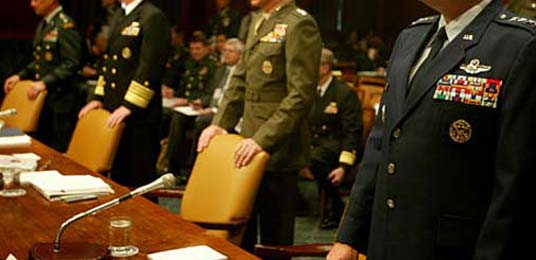
Cheney to Be Defense Witness in C.I.A. Leak Case
By DAVID JOHNSTON
A lawyer for I. Lewis Libby Jr., who is charged with perjury and obstruction, says the vice president will testify.
By DAVID JOHNSTON
A lawyer for I. Lewis Libby Jr., who is charged with perjury and obstruction, says the vice president will testify.
E.J. Dionne Jr.: No More NASCAR Fakers
It’s shocking how quickly the “real America,” as described by political pollsters, morphed from Bush/Cheney country to Stewart/Colbert country.
It’s shocking how quickly the “real America,” as described by political pollsters, morphed from Bush/Cheney country to Stewart/Colbert country.
The Rascals are Still In Charge
by Paul Campos
At the beginning of the Seven Years' War, the English admiral John Byng was sent to relieve Fort St. Philip on the island of Minorca. Commanding an undermanned fleet, Byng was unable to repulse the French warships besieging the island, and the fort was forced to surrender.
When he returned to England, Byng was court-martialed, and convicted for having failed "to do his utmost" to secure victory. He was executed by firing squad on the deck of the HMS Monarch, in Portsmouth Harbor. This incident inspired the French writer Voltaire's famously sardonic comment that in England "it is considered a good thing to kill an admiral from time to time, pour encourager les autres [to encourage the others]."
Voltaire's epigram crossed my mind when I heard neo-conservative military strategist Frederick Kagan holding forth on National Public Radio, regarding his plan to send a "surge" of new combat troops to Iraq. The word in Washington is that Kagan's plan is much to President Bush's liking, and that the president is inclined to put it into action next month.
Voltaire noted that in 18th century England mistakes made in the heat of battle could result in the most savage punishment. In America today, we are beset by the opposite problem: an incompetence so grotesque that it is as a practical matter difficult to distinguish from treason and in fact only increases the power and prestige of those who are guilty of it.
And while I wouldn't go so far as to recommend the occasional execution of a neo-conservative strategist, it's worth noting that the chief architects of the Iraq war have suffered no punishment whatsoever for plunging the nation into the biggest foreign policy disaster in our history.
Indeed, far from being subjected to any adverse consequences for sending America on a military adventure that has already cost hundreds of thousands of lives and hundreds of billions of dollars, while accomplishing the remarkable feat of leaving the Iraqi people even worse off than they were under Saddam Hussein, people like Kagan still control our Iraq strategy.
This is an odd state of affairs. It could be compared to empowering the former management of Enron to balance the federal budget, or hiring O.J. Simpson as a marriage counselor. Yet, when it comes to Iraq, nothing succeeds like failure. (The honors showered on the likes of Paul Bremer, Paul Wolfowitz and Donald Rumsfeld would have been considered completely unbelievable if these people had been characters in a satirical novel.)
Last month, Republicans suffered a crushing defeat in the midterm elections, largely because of public disgust with the war. Last week, polls revealed that more than seven of 10 Americans disapprove of President Bush's current war strategy, and that only 12 percent of the nation wants to toss more troops into the maw of this ever-expanding fiasco.
To say that something that's supported by 12 percent of the public is a fringe position is an understatement (you could probably get 12 percent of the public to favor an invasion of Jupiter).
None of this seems to make any difference. It doesn't even make any difference that many of the president's own generals are against sending more American troops to Iraq, and would openly oppose any such move if doing so wasn't the equivalent of career suicide.
Of all the tragic aspects of this national disaster this is worst: The people who have been catastrophically wrong about everything are still in charge. And a year from now, when things are even worse in Iraq, we can be sure the neo-conservatives will still be demanding that yet more American soldiers die so that Kagan and his ilk can continue to live out their increasingly destructive geopolitical fantasies.
A few of these people need to begin to pay some price for the damage they're doing - if only "to encourage the others" to stop.
by Paul Campos
At the beginning of the Seven Years' War, the English admiral John Byng was sent to relieve Fort St. Philip on the island of Minorca. Commanding an undermanned fleet, Byng was unable to repulse the French warships besieging the island, and the fort was forced to surrender.
When he returned to England, Byng was court-martialed, and convicted for having failed "to do his utmost" to secure victory. He was executed by firing squad on the deck of the HMS Monarch, in Portsmouth Harbor. This incident inspired the French writer Voltaire's famously sardonic comment that in England "it is considered a good thing to kill an admiral from time to time, pour encourager les autres [to encourage the others]."
Voltaire's epigram crossed my mind when I heard neo-conservative military strategist Frederick Kagan holding forth on National Public Radio, regarding his plan to send a "surge" of new combat troops to Iraq. The word in Washington is that Kagan's plan is much to President Bush's liking, and that the president is inclined to put it into action next month.
Voltaire noted that in 18th century England mistakes made in the heat of battle could result in the most savage punishment. In America today, we are beset by the opposite problem: an incompetence so grotesque that it is as a practical matter difficult to distinguish from treason and in fact only increases the power and prestige of those who are guilty of it.
And while I wouldn't go so far as to recommend the occasional execution of a neo-conservative strategist, it's worth noting that the chief architects of the Iraq war have suffered no punishment whatsoever for plunging the nation into the biggest foreign policy disaster in our history.
Indeed, far from being subjected to any adverse consequences for sending America on a military adventure that has already cost hundreds of thousands of lives and hundreds of billions of dollars, while accomplishing the remarkable feat of leaving the Iraqi people even worse off than they were under Saddam Hussein, people like Kagan still control our Iraq strategy.
This is an odd state of affairs. It could be compared to empowering the former management of Enron to balance the federal budget, or hiring O.J. Simpson as a marriage counselor. Yet, when it comes to Iraq, nothing succeeds like failure. (The honors showered on the likes of Paul Bremer, Paul Wolfowitz and Donald Rumsfeld would have been considered completely unbelievable if these people had been characters in a satirical novel.)
Last month, Republicans suffered a crushing defeat in the midterm elections, largely because of public disgust with the war. Last week, polls revealed that more than seven of 10 Americans disapprove of President Bush's current war strategy, and that only 12 percent of the nation wants to toss more troops into the maw of this ever-expanding fiasco.
To say that something that's supported by 12 percent of the public is a fringe position is an understatement (you could probably get 12 percent of the public to favor an invasion of Jupiter).
None of this seems to make any difference. It doesn't even make any difference that many of the president's own generals are against sending more American troops to Iraq, and would openly oppose any such move if doing so wasn't the equivalent of career suicide.
Of all the tragic aspects of this national disaster this is worst: The people who have been catastrophically wrong about everything are still in charge. And a year from now, when things are even worse in Iraq, we can be sure the neo-conservatives will still be demanding that yet more American soldiers die so that Kagan and his ilk can continue to live out their increasingly destructive geopolitical fantasies.
A few of these people need to begin to pay some price for the damage they're doing - if only "to encourage the others" to stop.
Dear Mr. President: Al-Qaida isn't the problem in Iraq
The Los Angeles Times writes today on a report from the Defense Department to Congress that says Muqtada al-Sadr's army is the greatest threat in Iraq.
The Times' story also includes an unsubtle swipe at President Bush, who has continued his campaign to link the war in Iraq to the war on terror by blaming al-Qaida for the violence there. This latest survey would seem to put the lie to that particular canard.
Insurgents cutting off Baghdad's power
The failure of American and Iraqi forces to provide reliable electrical services in Baghdad has been a persistent, and serious, problem for much of the post-war period, decreasing the credibility of Americans and of the new government in the eyes of many residents there. Now, the New York Times says, the insurgents are capitalizing on that failure and making the problem worse.
The Times reports that insurgent attacks have essentially isolated the city from outside power sources, forcing it to rely on outdated and overworked plants inside the city. One problem with the city's plants, the Times notes, is the failure of Americans working on reconstruction to plan ahead: they installed one plant that uses powerful engines that can only run on the kind of highly refined fuel that war-torn Iraq is not currently capable of producing.
What's particularly interesting about the Times' article is the discrepancy between the accounts of the Iraqi electricity minister, who seems deeply pessimistic about the situation, and "Western officials," who are described as "generally more optimistic." Seems to us like a parable for the war as a whole.
-- Alex Koppelman
The Los Angeles Times writes today on a report from the Defense Department to Congress that says Muqtada al-Sadr's army is the greatest threat in Iraq.
The Times' story also includes an unsubtle swipe at President Bush, who has continued his campaign to link the war in Iraq to the war on terror by blaming al-Qaida for the violence there. This latest survey would seem to put the lie to that particular canard.
Insurgents cutting off Baghdad's power
The failure of American and Iraqi forces to provide reliable electrical services in Baghdad has been a persistent, and serious, problem for much of the post-war period, decreasing the credibility of Americans and of the new government in the eyes of many residents there. Now, the New York Times says, the insurgents are capitalizing on that failure and making the problem worse.
The Times reports that insurgent attacks have essentially isolated the city from outside power sources, forcing it to rely on outdated and overworked plants inside the city. One problem with the city's plants, the Times notes, is the failure of Americans working on reconstruction to plan ahead: they installed one plant that uses powerful engines that can only run on the kind of highly refined fuel that war-torn Iraq is not currently capable of producing.
What's particularly interesting about the Times' article is the discrepancy between the accounts of the Iraqi electricity minister, who seems deeply pessimistic about the situation, and "Western officials," who are described as "generally more optimistic." Seems to us like a parable for the war as a whole.
-- Alex Koppelman

Worse Than Apartheid
by Chris Hedges
The N.Y. Times’ former Middle East bureau chief, writing about Israel’s unrelenting attack on the Gaza Strip, argues: “It is a sad commentary on the gutlessness of the American press and timidity of the Democratic opposition that most Americans are not aware of the catastrophic humanitarian crisis they bear so much responsibility in creating.” Above: Water mixes with blood in a street of a northern Gaza Strip town after an Israeli tank shelling in November.
Monday, December 18, 2006

 A Surge of Insanity
by Arianna Huffington
Harry Reid started off well on This Week with George Stephanopoulos, answering a question about Iraq by saying, "We have to change course in Iraq, that was determined on November 7th and the people feel even more strongly today than they did on November 7th. By the first quarter of 2008, American troops should be out of there."
But then the segment, to borrow from a recent but already dead report, became grave and deteriorating. Stephanopoulos asked what Reid would do if the president -- as he's expected to -- calls for even more troops to be sent to Iraq.
"If it's part of a program to get us out of there as indicated by this time next year, then sure I'll go along with it," he said.
To which Stephanopoulos rightly asked: "How will you know that it's going to be temporary?"
Of course, Reid doesn't know that. Nor did Reid even broach the question whether the so-called "surge" is the right thing to do if it were to last a single day.
The senator was right about one thing, though, and that's the message that the American people sent on November 7th -- that they want to end this war and end it quickly.
And yes, I have no doubt that when Bush presents his "surge" plan, or "New Way Forward," or whatever meaningless term he's going to call it, he'll present it in the most sugar-coated way possible.
Part of what has enabled this disastrous war from the beginning has been the willful delusion about who George Bush is and how he operates. Harry Reid will go along with my plan if I tell him it's "temporary"? Fine, Harry, "the plan is temporary." But only someone with a surge of insanity would go along with this.
Which is why the public voted the way it did in November and why only 12% of Americans support this "surge." George Bush has no intention of pulling the troops out. The only thing this surge will accomplish is a surge of more death and destruction.
Harry Reid began his segment today by talking about the health of South Dakota Senator Tim Johnson. We all of course wish Senator Johnson a speedy recovery, but one of the reasons why his health has been the subject of so much attention is because of the possibility of the Senate going back into Republican hands. If Senator Reid's idea of leadership is to trust President Bush on yet another last ditch effort --however temporary-- to "fix" Iraq, it apparently doesn't matter which party controls the Senate.
As the old saying goes, there is nothing so permanent as a temporary solution. Except President Bush's incompetence, willful denial of reality and refusal to listen to the will of the American people. We don't need a surge of those any more than we need a surge of troops in Iraq.
Here's hoping Senator Reid comes to his senses.
Sunday, December 17, 2006
Mary Cheney's Bundle of Joy - New York Times
The New York Times
--------------------------------------------------------------------------------
December 17, 2006
Op-Ed Columnist
Mary Cheney's Bundle of Joy
By
FRANK RICH
IT'S not the least of John McCain's political talents that he comes across
as a paragon of straight talk even when he isn't talking straight. So it was
a surprise to see him reduced to near-stammering on ABC's "This Week" two
Sundays after the election. The subject that brought him low was the
elephant
in the elephants' room, or perhaps we should say in their closet:
homosexuality.
Senator McCain is no bigot, and his only goal was to change the subject as
quickly as possible. He kept repeating two safe talking points for dear
life:
he opposes same-sex marriage (as does every major presidential aspirant in
both parties) and he is opposed to discrimination. But because he had
endorsed
a broadly written Arizona ballot initiative that could have been used to
discriminate against unmarried domestic partners, George Stephanopoulos
wouldn't
let him off the hook.
"Are you against civil unions for gay couples?" he asked the senator, who
replied, "No, I'm not." When Mr. Stephanopoulos reiterated the question
seconds
later - "So you're for civil unions?" - Mr. McCain answered, "No." In other
words, he was not against civil unions before he was against them. His gaffe
was reminiscent of a similar appearance on Mr. Stephanopoulos's show in 2004
by Bill Frist, a Harvard-trained doctor who refused to criticize a federal
abstinence program that catered to the religious right by spreading the
canard that sweat and tears could transmit AIDS.
Senator Frist is now a lame duck, and his brand of pandering, typified by
his
errant upbeat diagnosis
of the brain-dead Terri Schiavo's condition, is following him to political
Valhalla. The 2006 midterms left Karl Rove's supposedly foolproof playbook
in
tatters. It was hard for the Republicans to deal the gay card one more time
after the Mark Foley and Ted Haggard scandals revealed that today's
conservative
hierarchy is much like Roy Cohn's milieu in "Angels in America," minus the
wit and pathos.
This time around,
ballot initiatives banning same-sex marriage
drew markedly less support than in 2004; the draconian one endorsed by Mr.
McCain in Arizona was voted down altogether. Two national politicians who
had
kowtowed egregiously to their party's fringe, Rick Santorum and George
Allen, were defeated, joining their ideological fellow travelers
Tom DeLay
and
Ralph Reed
in the political junkyard. To further confirm the inexorable march of
social history, the only Christmas season miracle to lift the beleaguered
Bush administration
this year has been the announcement that
Mary Cheney, the vice president's gay daughter, is pregnant
. Her growing family is the living rejoinder to those in her father's party
who would relegate gay American couples and their children to second-class
legal
or human status.
Yet not even these political realities have entirely broken the knee-jerk
habit of some 2008 Republican presidential hopefuls to woo homophobes. Mitt
Romney,
the Republican Massachusetts governor, was caught in yet another
embarrassing example of his party's hypocrisy last week. In a
newly unearthed letter
courting the gay Log Cabin Republicans during his unsuccessful 1994 Senate
race, he promised to "do better" than even Ted Kennedy in making "equality
for
gays and lesbians a mainstream concern." Given that Mr. Romney has been
making
opposition to same-sex marriage his political calling card
this year, his ideological bisexuality looks as foolish in its G-rated way
as that of Mr. Haggard, the evangelical leader who was caught keeping time
with
a male prostitute.
There's no evidence that Mr. Romney's rightward move on gay civil rights and
abortion (
about which he acknowledges his flip-flop
) has helped him politically. Or that Mr. McCain has benefited from a
similar sea change that has taken him from accurately labeling Jerry Falwell
and Pat
Robertson "
agents of intolerance
" in 2000 to appearing at
Mr. Falwell's Liberty University
this year. A
Washington Post-ABC News poll
last week found that among Republican voters, Rudy Giuliani, an unabashed
liberal on gay civil rights and abortion, leads Mr. McCain 34 percent to 26
percent.
Mr. Romney brought up the rear, at 5 percent. That does, however, put him
nominally ahead of another presidential wannabe, the religious-right
favorite
Sam Brownback, who has
held up a federal judicial nomination
in the Senate because the nominee had attended a lesbian neighbor's
commitment ceremony.
For those who are cheered by seeing the Rovian politics of wedge issues
start to fade, the good news does not end with the growing evidence that
gay-baiting
may do candidates who traffic in it more harm than good. It's not only
centrist American voters of both parties who reject divisive demagoguery but
also
conservative evangelicals themselves. Some of them are at last standing up
to the extremists in their own camp.
No one more dramatically so, perhaps, than Rick Warren, the Orange County,
Calif., megachurch leader and best-selling author of "The Purpose Driven
Life."
He has adopted AIDS in Africa as a signature crusade, and
invited Barack Obama
to join the usual suspects, including Senator Brownback, to address his
World AIDS Day conference
on the issue. This prompted predictable
outrage from the right
because of Mr. Obama's liberal politics, especially on abortion. One radio
host, Kevin McCullough,
demonized the Democrat
for pursuing "inhumane, sick and sinister evil" as a legislator. An open
letter sponsored by 18 "pro-life" groups
protested the invitation
, also citing Mr. Obama's "evil." But Mr. Warren didn't blink.
Among those defending the invitation was David Kuo, the former deputy
director of the Bush White House's Office of Faith-Based and Community
Initiatives.
In a book, "Tempting Faith," as well as in interviews and on his blog, the
heretical Mr. Kuo has become a
tough conservative critic
of the corruption of religion by politicians and religious-right leaders
who are guilty of "taking Jesus and reducing him to some precinct captain,
to
some get-out-the-vote guy." Of those "family" groups who criticized Mr.
Obama's appearance at the AIDS conference, Mr. Kuo
wrote
, "Are they so blind and possessed with such a narrow definition of life
that they can think of life only in utero?" The answer, of course, is yes.
The
Christian Coalition
parted ways with its new president-elect
, a Florida megachurch pastor, Joel Hunter, after he announced that he would
take on bigger issues like poverty and global warming.
But it is leaders like Mr. Hunter and Mr. Warren who are in ascendance. Even
the Rev. Richard Cizik, vice president for governmental affairs at Mr.
Haggard's
former perch, the National Association of Evangelicals, has joined a number
of his peers in
taking up the cause of the environment
, putting him at odds with the Bush administration. Such religious leaders
may not have given up their opposition to abortion or gay marriage, but they
have more pressing priorities. They seem to have figured out, as Mr. Kuo has
said, that "
politicians use Christian voters for their money and for their votes
" and give them little in return except a reputation for bigotry and
heartless opposition to the lifesaving potential of stem-cell research.
The axis of family jihadis - Focus on the Family, the Family Research
Council, the American Family Association - is feeling the heat; its
positions get
more extreme by the day. A Concerned Women for America mouthpiece called
Mary Cheney's pregnancy "
unconscionable
," condemning her for having "injured her child" and "acted in a way that
denies everything that the Bush administration has worked for." (That last
statement,
thankfully, is true.) This overkill reeks of desperation. So does these
zealots' recent assault on the supposedly
feminizing "medical" properties of soy baby formula
(which deserves the "blame for today's rise in homosexuality," according to
the chairman of Megashift Ministries), and penguins.
Yes, penguins. These fine birds have now joined the Teletubbies and
SpongeBob SquarePants in the pantheon of cuddly secret agents for "the gay
agenda."
Schools are being
forced to defend
"And Tango Makes Three," an acclaimed children's picture book based on the
true story of two Central Park Zoo male penguins who adopted a chick from a
fertilized egg. The hit penguin movie "Happy Feet" has been outed for an
"anti-religious bias" and its "endorsement of gay identity" by
Michael Medved
, the commentator who sets the tone for the religious right's strictly
enforced code of cultural political correctness.
Such censoriousness is increasingly the stuff of comedy. So are politicians
of all stripes who advertise their faith. A liberal like Howard Dean is no
more
credible talking about the Bible (during the 2004 campaign he said his
favorite book in the New Testament was Job
) than twice-married candidates like Mr. McCain are persuasive at pledging
allegiance to "the sanctity of marriage."
For all the skeptical theories about the Obama boomlet - or real boom, we
don't know yet - no one doubts that his language about faith is his own, not
a
crib sheet provided by a conservative evangelical preacher or a liberal
political consultant on "values." That's why a Democrat from Chicago whose
voting
record is to the left of Hillary Clinton's received the same
standing ovation
from the thousands at Rick Warren's Saddleback Church that he did from
his own party's throngs
in New Hampshire. After a quarter-century of watching politicians from both
parties exploit religion for partisan and often mean-spirited political
gain,
voters on all sides of this country's culture wars are finally in the market
for something new.
Copyright 2006
The New York Times Company
Posted by Miriam V.
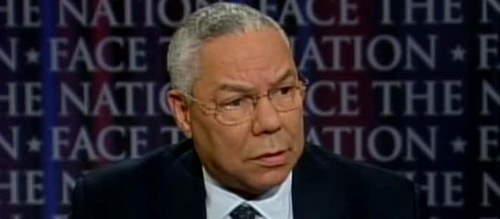
The Lieberman maneuver
Regardless of Sen. Tim Johnson's health, Bush could easily hand the Senate back to the GOP -- by appointing the Connecticut senator to fill Bolton's slot at the U.N.
By Joe Conason
The sudden illness of Sen. Tim Johnson, D-S.D., shook Democrats from their post-election bliss by reminding them that their Senate majority is as narrow as it could possibly be -- and that an unexpected misfortune could instantly deprive them of power in Congress' upper chamber.
Although Johnson now appears to be recovering from a brain hemorrhage that required emergency surgery on Wednesday, the potential shift that could result from his incapacitation certainly awakened Republicans to the possibility of regaining lost power. Nowhere are such chances eyed more keenly than in the White House, where George W. Bush and his aides face spending his final years as president under investigation by the Senate as well as the House of Representatives.
But regardless of Sen. Johnson's health, the president may yet be able to tip the balance. With a single stroke, he could restore control of the Senate to the Republicans, fill an embarrassing vacancy in his administration and score bipartisan points -- by appointing Sen. Joe Lieberman, I-Conn., to serve as the next U.S. ambassador to the United Nations. Should Lieberman be nominated and accept that position, Connecticut's Republican Gov. Jodi Rell has the constitutional authority to name a new senator.
In many ways, Lieberman provides a perfect choice for Bush to replace John Bolton, the departing ambassador who resigned recently because the Senate wouldn't confirm him. Nominating a longtime Democrat who has endorsed many of the Bush administration's foreign policy positions, especially on the war in Iraq, would give the appearance of bipartisanship without requiring any real compromise with the opposition.
Just this week Lieberman joined a congressional delegation to Iraq that included John McCain, R-Ariz., providing moral support to the Arizona senator's call for an escalation of the American military effort. He has repeatedly denounced the "partisanship" of Democrats who criticize the war and the White House, a favor repaid by Karl Rove with open Republican support for his reelection campaign this fall. More broadly, Lieberman shares the world outlook of the Bush White House concerning not only the Mideast and Israel but also the global "war on terror," belligerence toward Iran and Syria, and a strict embargo against Cuba. He is quite comfortable with the GOP's neoconservative wing, as evidenced by his participation in organizations such as the Foundation for Defense of Democracies and the Committee on the Present Danger.
Although Lieberman vehemently disagrees with the president on the issue of climate change, his overall perspective wouldn't require any great adjustment to conform with administration policy. (Indeed, Lieberman cheerfully submitted to much more challenging adaptations in 2000 when he moved leftward to run as the Democratic vice-presidential nominee.) He is somewhat less obnoxious personally than Bolton, but not so very different in substance.
To Bush, however, Lieberman might represent a refreshing change -- if only because the long nomination struggle over Bolton could end at last with a resounding victory instead of an infuriating defeat. Selecting a three-term senator who has made alliances on both sides of the aisle would ensure a smooth confirmation process. Many Democrats have mixed feelings about their old colleague these days, and he feels the same way about many of them. But institutional comity would require them to vote for him. (And how amusing for the Republicans to watch their adversaries vote themselves back into the minority with gritted teeth.)
According to the New York Daily News, Lieberman actually was the president's first choice for the U.N. post. Thomas DeFrank, the paper's Washington bureau chief, reported last December that Bush had offered the job to the Connecticut senator, who thought about it for a week before saying no. If that is true, then he may be at the top of the list of nominees, which is said to include U.S. ambassador to Iraq Zalmay Khalilzad, Undersecretary of State Paula Dobriansky and Jim Leach, R-Iowa, who lost his congressional seat last month.
Many observers doubt that Lieberman will change his mind now if offered the U.N. post again, despite perks such as a big apartment in the Waldorf-Astoria Hotel, a chance to live in Manhattan rather than Washington and a turn on the world stage in the tradition of the late Daniel Patrick Moynihan. They can't imagine why Lieberman would accept an appointment that is likely to last for only two years when he can simply stay in the six-year sinecure that he worked so hard to keep.
Certainly such doubts make sense. The likelihood that Lieberman would leave the Senate is probably quite small. But if the Republicans really want to steal the Senate back before the Democrats take over, they can certainly whisper tempting blandishments into his ear. How about a nice, million-dollar job with, for instance, the Carlyle Group?
Or maybe even the ego-boosting prospect of another vice-presidential nomination in 2008 -- this time on a "bipartisan" ticket with friend and fellow hawk John McCain?
Regardless of Sen. Tim Johnson's health, Bush could easily hand the Senate back to the GOP -- by appointing the Connecticut senator to fill Bolton's slot at the U.N.
By Joe Conason
The sudden illness of Sen. Tim Johnson, D-S.D., shook Democrats from their post-election bliss by reminding them that their Senate majority is as narrow as it could possibly be -- and that an unexpected misfortune could instantly deprive them of power in Congress' upper chamber.
Although Johnson now appears to be recovering from a brain hemorrhage that required emergency surgery on Wednesday, the potential shift that could result from his incapacitation certainly awakened Republicans to the possibility of regaining lost power. Nowhere are such chances eyed more keenly than in the White House, where George W. Bush and his aides face spending his final years as president under investigation by the Senate as well as the House of Representatives.
But regardless of Sen. Johnson's health, the president may yet be able to tip the balance. With a single stroke, he could restore control of the Senate to the Republicans, fill an embarrassing vacancy in his administration and score bipartisan points -- by appointing Sen. Joe Lieberman, I-Conn., to serve as the next U.S. ambassador to the United Nations. Should Lieberman be nominated and accept that position, Connecticut's Republican Gov. Jodi Rell has the constitutional authority to name a new senator.
In many ways, Lieberman provides a perfect choice for Bush to replace John Bolton, the departing ambassador who resigned recently because the Senate wouldn't confirm him. Nominating a longtime Democrat who has endorsed many of the Bush administration's foreign policy positions, especially on the war in Iraq, would give the appearance of bipartisanship without requiring any real compromise with the opposition.
Just this week Lieberman joined a congressional delegation to Iraq that included John McCain, R-Ariz., providing moral support to the Arizona senator's call for an escalation of the American military effort. He has repeatedly denounced the "partisanship" of Democrats who criticize the war and the White House, a favor repaid by Karl Rove with open Republican support for his reelection campaign this fall. More broadly, Lieberman shares the world outlook of the Bush White House concerning not only the Mideast and Israel but also the global "war on terror," belligerence toward Iran and Syria, and a strict embargo against Cuba. He is quite comfortable with the GOP's neoconservative wing, as evidenced by his participation in organizations such as the Foundation for Defense of Democracies and the Committee on the Present Danger.
Although Lieberman vehemently disagrees with the president on the issue of climate change, his overall perspective wouldn't require any great adjustment to conform with administration policy. (Indeed, Lieberman cheerfully submitted to much more challenging adaptations in 2000 when he moved leftward to run as the Democratic vice-presidential nominee.) He is somewhat less obnoxious personally than Bolton, but not so very different in substance.
To Bush, however, Lieberman might represent a refreshing change -- if only because the long nomination struggle over Bolton could end at last with a resounding victory instead of an infuriating defeat. Selecting a three-term senator who has made alliances on both sides of the aisle would ensure a smooth confirmation process. Many Democrats have mixed feelings about their old colleague these days, and he feels the same way about many of them. But institutional comity would require them to vote for him. (And how amusing for the Republicans to watch their adversaries vote themselves back into the minority with gritted teeth.)
According to the New York Daily News, Lieberman actually was the president's first choice for the U.N. post. Thomas DeFrank, the paper's Washington bureau chief, reported last December that Bush had offered the job to the Connecticut senator, who thought about it for a week before saying no. If that is true, then he may be at the top of the list of nominees, which is said to include U.S. ambassador to Iraq Zalmay Khalilzad, Undersecretary of State Paula Dobriansky and Jim Leach, R-Iowa, who lost his congressional seat last month.
Many observers doubt that Lieberman will change his mind now if offered the U.N. post again, despite perks such as a big apartment in the Waldorf-Astoria Hotel, a chance to live in Manhattan rather than Washington and a turn on the world stage in the tradition of the late Daniel Patrick Moynihan. They can't imagine why Lieberman would accept an appointment that is likely to last for only two years when he can simply stay in the six-year sinecure that he worked so hard to keep.
Certainly such doubts make sense. The likelihood that Lieberman would leave the Senate is probably quite small. But if the Republicans really want to steal the Senate back before the Democrats take over, they can certainly whisper tempting blandishments into his ear. How about a nice, million-dollar job with, for instance, the Carlyle Group?
Or maybe even the ego-boosting prospect of another vice-presidential nomination in 2008 -- this time on a "bipartisan" ticket with friend and fellow hawk John McCain?
Saturday, December 16, 2006



E.J. Dionne Jr.: Putting Iraq on the Credit Card
Believe it or not, winning the war in Iraq was never the Bush administration’s highest priority. Saving its tax cuts was more important. That was once spoken of as a moral problem. Now, it’s a practical barrier to a successful outcome.

Congress vs. Big Pharma: Let the Games Begin
Doughnut holes, drug scams, and Dingell: With the pharmaceutical industry cozying up to the Democrats, reform may be DOA for now — but watch for a few killer investigations. James Ridgeway


Subscribe to:
Posts (Atom)