Sunday, August 27, 2006

The Cheney Presidency

Published on Saturday, August 26, 2006 by the Boston Globe
by Robert Kuttner


George W. Bush has been faulted in some quarters for taking an extended vacation while the Middle East festers. It doesn't much matter; the man running the country is Vice President Dick Cheney.

When historians look back on the multiple assaults on our constitutional system of government in this era, Cheney's unprecedented role will come in for overdue notice. Cheney's shotgun mishap, when he accidentally sprayed his host with birdshot, has gotten more media attention than has his control of the government.

Historically, the vice president's job was to ceremonially preside over the Senate, attend second-tier foreign funerals, and be prepared for the president to die. Students are taught that John Nance Garner, Franklin Roosevelt's first vice president, compared the job to a bucket of warm spit (and historians say spit was not the word the pungent Texan actually used).

Recent vice presidents Walter Mondale and Al Gore were given more authority than most, but there was no doubt that the president was in charge.

Cheney is in a class by himself. The administration's grand strategy and its implementation are the work of Cheney-- sometimes Cheney and Defense Secretary Donald Rumsfeld, sometimes Cheney and political director Karl Rove.

Cheney has planted aides in major Cabinet departments, often over the objection of a Cabinet secretary, to make sure his policies are carried out. He sits in on the Senate Republican caucus, to stamp out any rebellions. Cheney loyalists from the Office of the Vice President dominate interagency planning meetings.

The Iraq war is the work of Cheney and Rumsfeld. The capture of the career civil service is pure Cheney. The disciplining of Congress is the work of Cheney and Rove. The turning over of energy policy to the oil companies is Cheney. The extreme secrecy is Cheney and Attorney General Alberto Gonzales.

If Cheney were the president, more of this would be smoked out because the press would be paying attention. The New York Times' acerbic columnist Maureen Dowd regularly makes sport of Cheney's dominance, and there are plenty of jokes (Bush is a heartbeat away from the presidency). But you can count serious newspaper or magazine articles on Cheney's operation on the fingers of one hand. One exceptional example is Jane Mayer's piece in the July 3 New Yorker on Cheney operative David Addington .

Cheney's power is matched only by his penchant for secrecy. When my colleague at the American Prospect, Robert Dreyfuss, requested the names of people who serve on the vice president's staff, he was told this was classified information. Former staffers for other departments provided Dreyfuss with names.

So secretive is Cheney (and so incurious the media) that when his chief of staff, Irving Lewis Libby, was implicated in the leaked identity of CIA agent Valerie Plame Wilson, reporters who rushed to look Libby up on Nexis and Google found that Libby had barely rated previous press attention.

Why does this matter? Because if the man actually running the government is out of the spotlight, the administration and its policies are far less accountable.

When George W. Bush narrowly defeated John Kerry in 2004, many commentators observed that Bush was the fellow with whom you would rather have a beer. It's an accurate and unflattering comment on the American electorate -- but then who wants to have a beer with Cheney? The public may not know the details of his operation, but voters intuitively recoil from him.

Bush's popularity ratings are now under 40 percent, beer or no, reflecting dwindling confidence in where he is taking the country. But Cheney's ratings are stuck around 20 percent, far below that of any president.
If Cheney were the actual president, not just the de facto one, he simply could not govern with the same set of policies and approval ratings of 20 percent. The media focuses relentless attention on the president, on the premise that he is actually the chief executive. But for all intents and purposes, Cheney is chief, and Bush is more in the ceremonial role of the queen of England.

Yet the press buys the pretense of Bush being ``the decider," and relentlessly covers Bush -- meeting with world leaders, cutting brush, holding press conferences, while Cheney works in secret, largely undisturbed. So let's take half the members of the overblown White House press corps, which has almost nothing to do anyway, and send them over to Cheney Boot Camp for Reporters. They might learn how to be journalists again, and we might learn who is running the government.

The Man Who Said Too Much

A book coauthored by NEWSWEEK's Michael Isikoff details Richard Armitage's central role in the Valerie Plame leak


By Michael Isikoff
Newsweek

In the early morning of Oct. 1, 2003, Secretary of State Colin Powell received an urgent phone call from his No. 2 at the State Department. Richard Armitage was clearly agitated. As recounted in a new book, "Hubris: The Inside Story of Spin, Scandal, and the Selling of the Iraq War," Armitage had been at home reading the newspaper and had come across a column by journalist Robert Novak. Months earlier, Novak had caused a huge stir when he revealed that Valerie Plame, wife of Iraq-war critic Joseph Wilson, was a CIA officer. Ever since, Washington had been trying to find out who leaked the information to Novak. The columnist himself had kept quiet. But now, in a second column, Novak provided a tantalizing clue: his primary source, he wrote, was a "senior administration official" who was "not a partisan gunslinger." Armitage was shaken. After reading the column, he knew immediately who the leaker was. On the phone with Powell that morning, Armitage was "in deep distress," says a source directly familiar with the conversation who asked not to be identified because of legal sensitivities. "I'm sure he's talking about me."

Armitage's admission led to a flurry of anxious phone calls and meetings that day at the State Department. (Days earlier, the Justice Department had launched a criminal investigation into the Plame leak after the CIA informed officials there that she was an undercover officer.) Within hours, William Howard Taft IV, the State Department's legal adviser, notified a senior Justice official that Armitage had information relevant to the case. The next day, a team of FBI agents and Justice prosecutors investigating the leak questioned the deputy secretary. Armitage acknowledged that he had passed along to Novak information contained in a classified State Department memo: that Wilson's wife worked on weapons-of-mass-destruction issues at the CIA. (The memo made no reference to her undercover status.) Armitage had met with Novak in his State Department office on July 8, 2003—just days before Novak published his first piece identifying Plame. Powell, Armitage and Taft, the only three officials at the State Department who knew the story, never breathed a word of it publicly and Armitage's role remained secret.

Armitage, a well-known gossip who loves to dish and receive juicy tidbits about Washington characters, apparently hadn't thought through the possible implications of telling Novak about Plame's identity. "I'm afraid I may be the guy that caused this whole thing," he later told Carl Ford Jr., State's intelligence chief. Ford says Armitage admitted to him that he had "slipped up" and told Novak more than he should have. "He was basically beside himself that he was the guy that f---ed up. My sense from Rich is that it was just chitchat," Ford recalls in "Hubris," to be published next week by Crown and co-written by the author of this article and David Corn, Washington editor of The Nation magazine.

As it turned out, Novak wasn't the only person Armitage talked to about Plame. Washington Post reporter Bob Woodward has also said he was told of Plame's identity in June 2003. Woodward did not respond to requests for comment for this article, but, as late as last week, he referred reporters to his comments in November 2005 that he learned of her identity in a "casual and offhand" conversation with an administration official he declined to identify. According to three government officials, a lawyer familiar with the case and an Armitage confidant, all of whom would not be named discussing these details, Armitage told Woodward about Plame three weeks before talking to Novak. Armitage has consistently refused to discuss the case; through an assistant last week he declined to comment for this story. Novak would say only: "I don't discuss my sources until they reveal themselves."

Armitage's central role as the primary source on Plame is detailed for the first time in "Hubris," which recounts the leak case and the inside battles at the CIA and White House in the run-up to the war. The disclosures about Armitage, gleaned from interviews with colleagues, friends and lawyers directly involved in the case, underscore one of the ironies of the Plame investigation: that the initial leak, seized on by administration critics as evidence of how far the White House was willing to go to smear an opponent, came from a man who had no apparent intention of harming anyone.

Indeed, Armitage was a member of the administration's small moderate wing. Along with his boss and good friend, Powell, he had deep misgivings about President George W. Bush's march to war. A barrel-chested Vietnam vet who had volunteered for combat, Armitage at times expressed disdain for Dick Cheney and other administration war hawks who had never served in the military. Armitage routinely returned from White House meetings shaking his head at the armchair warriors. "One day," says Powell's former chief of staff Larry Wilkerson, "we were walking into his office and Rich turned to me and said, 'Larry, these guys never heard a bullet go by their ears in anger ... None of them ever served. They're a bunch of jerks'."

But officials at the White House also told reporters about Wilson's wife in an effort to discredit Wilson for his public attacks on Bush's handling of Iraq intelligence. Karl Rove confirmed to Novak that Wilson's wife worked at the CIA, and days later offered the same information to Time reporter Matt Cooper. The inquiry into the case led to the indictment of Cheney's chief of staff, I. Lewis (Scooter) Libby, on charges of perjury and obstruction of justice. Armitage himself was aggressively investigated by special counsel Patrick Fitzgerald, but was never charged. Fitzgerald found no evidence that Armitage knew of Plame's covert CIA status when he talked to Novak and Woodward. The decision to go to the FBI that panicky October afternoon also may have helped Armitage. Powell, Armitage and Taft were aware of the perils of a cover-up—all three had lived through the Iran-contra scandal at the Defense Department in the late 1980s.

Taft, the State Department lawyer, also felt obligated to inform White House counsel Alberto Gonzales. But Powell and his aides feared the White House would then leak that Armitage had been Novak's source—possibly to embarrass State Department officials who had been unenthusiastic about Bush's Iraq policy. So Taft told Gonzales the bare minimum: that the State Department had passed some information about the case to Justice. He didn't mention Armitage. Taft asked if Gonzales wanted to know the details. The president's lawyer, playing the case by the book, said no, and Taft told him nothing more. Armitage's role thus remained that rarest of Washington phenomena: a hot secret that never leaked.

"I am Macaca"


University of Virginia students seeking a spot in Larry Sabato's seminar on campaigns and elections have to write an essay as part of the admissions process. S.R. Sidarth's successful three-word submission: "I am Macaca."

Saturday, August 26, 2006

Warring Over the Heart of the Party

by Robert Scheer

Make no mistake about it: The fight within the Democratic Party over the Iraq war is as important as it is real. This is no sideshow between seasoned Sen. Joe Lieberman (D-Conn.) and upstart challenger Ned Lamont, between pros and bloggers, or lefties and conservatives within the party.

No, this battle transcends those labels and cuts to the obligation of politicians to be honest with the public. Indeed, a seasoned conservative Democratic politician should recognize the war in Iraq for the unmitigated disaster it is and seek to properly place responsibility for it on the incumbent Republican president.

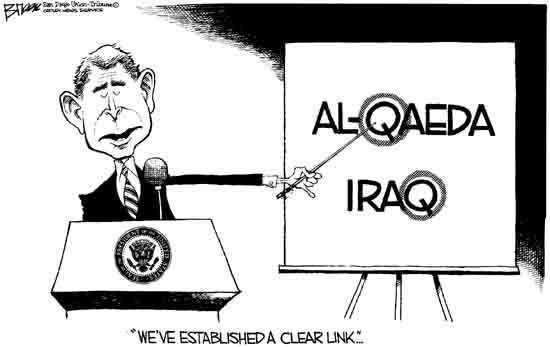
It is one thing for Democrats like Sen. John Kerry of Massachusetts to admit that they bought into the Bush administration’s lies about Saddam Hussein’s alleged nuke program and partnership with Al Qaeda and to now seek to make amends by working to bring the troops home. It is quite another, as Lieberman has, to continue to defend as wise this patently absurd betrayal of the public interest. And it moves from dumb to evil to claim that those like Lamont who dare tell the truth are giving aid and comfort to the enemy.

“If we just pick up like Ned Lamont wants us to do — get out by a date certain — it will be taken as a tremendous victory by the same people who wanted to blow up these planes in England. It will strengthen them and they will strike again,” Lieberman said after his defeat in the Connecticut primary earlier this month, indicting not only his opponent but all those who voted for him.

In fact, Lieberman, along with the president and vice president, has become a full-blown McCarthyite smear artist, painting his political opponents with the tar brush of treason in an alleged apocalyptic battle for civilization.

“I’m worried that too many people, both in politics and out, don’t appreciate the seriousness of the threat to American security and the evil of the enemy,” said Lieberman on Aug. 10, an enemy “more evil or as evil as Nazism and probably more dangerous than the Soviet Communists we fought during the long Cold War.”

Such hyperbole is not only historically ridiculous — more evil than Adolf Hitler and his extermination camps? ... more dangerous than the Soviets and their thousands of nukes? — it is a cynical attack on the free debate that is supposed to inform our nation’s leaders. The Lieberman-Cheney axis insists that not only are those who disagree with them traitorous or, at best, naive, but also that any and all military action conducted in the name of fighting terrorists is, by definition, good.

But what if the opposite were true? That, as Lamont and other critics of this quagmire argue, our clumsy presence in Iraq has increased the danger of Al Qaeda-style terrorism? After all, fundamentalist Al Qaeda did not have a base in Hussein’s secularized Iraq and has flourished there only since the United States brought chaos and American targets, many of them still teenagers, to Baghdad’s bloody streets.

Again, this is not really a “left” or “right” position. It is even conceded by the two leading national security experts associated with Lieberman and the centrist Democratic Leadership Council he helped found.

“The war in Iraq has proved to be a disaster for the struggle against Osama bin Laden,” Daniel L. Byman and Kenneth M. Pollack said in last Sunday’s Washington Post. “Fighters there are receiving training, building networks and becoming further radicalized — and the U.S. occupation is proving a dream recruiting tool for young Muslims worldwide.”

This is quite an admission coming from two Democratic hawks who vociferously supported the war: Pollack wrote the influential “Threatening Storm: The Case for Invading Iraq.” Back in April 2003, the two argued in the DLC’s magazine that democratizing Iraq would be made easier by the fact that “Iraq had perhaps the best educated, most secular, and most progressive population of all the Arab states” prior to the 1991 Persian Gulf War.

So are they chastened by the mayhem? No, they want us to dig ourselves a deeper hole. “It probably would require 450,000 troops to quash an all-out civil war there,” they say now. “Such an effort would require a commitment of enormous military and economic resources, far in excess of what the United States has already put forth.”

And once we bankrupt ourselves to make Iraq a giant military prison camp, what will we do then? Find a new Hussein to take over Iraq? As Lamont wrote in the Wall Street Journal last week, staying the course when the car is headed off the cliff is hardly a realistic position

Read it and Weep

by Adam Gopnik

Summer reading lists are meant both for self-improvement and to impress an audience. That boy reading Proust on the beach has an eye for the girl nearby turning the pages of Virginia Woolf as much as he does for his own vow to get to the end of the damn thing at last. Presidential summer reading lists are no different, meant as much to titillate a particular public as to inventory a private disposition. When the President announces that he is reading, say, a new three-volume history of the Louisiana Purchase, he may actually be reading it, but he is also signalling to the commentariat watching from the next dune that it’s time for them to go into their “surprisingly thoughtful statesman” bit.

Nonetheless, it is hard not to brood, in old-fashioned Kremlinological style, on the meanings of George W. Bush’s syllabus for this particular summer. Where in summers past he has read fiction by Tom Wolfe, or a comprehensive history of salt—both very good things in the right seasonal doses—this summer, perhaps under the pressure of events, he has embarked on a more strenuous list. An amazingly strenuous list, actually. It includes Albert Camus’s novel “The Stranger”; Kai Bird and Martin Sherwin’s book about Robert Oppenheimer and the invention of the atomic bomb; and Richard Carwardine’s new biography of Abraham Lincoln.

Already, it seems, the President has polished off the Camus and had a debate with his new press secretary, Tony Snow, on the origins of existentialism. Now, it’s possible to feel misgivings about the President’s ranch reading. Hasn’t there been, over the years, more useful material for him to scrutinize—memos, for instance, about Osama bin Laden’s intention to strike in the United States, or State Department studies on the difference between Sunnis and Shiites in a country he was about to invade? But it is the sunny optimism of humanism to imagine that books change lives, and that no one can come away from “The Stranger” entirely unaffected, particularly one who is, as he reminds us, a wartime President.

The book, after all, takes up the mysterious origins and horrific consequences of irrational acts of violence committed in the Arab world. Meursault, a French kid in Algeria caught up in a funk of alienation, shoots dead a stranger on the beach—a “native,” at that—for reasons he cannot explain even to himself. (He has had minor confrontations with Arabs, but Camus makes it plain that it hardly accounts for this act.) Camus’s purpose is to dramatize the psychology of pathological violence as a self-defining act, and his point, though open to debate with Tony Snow, is that violence may arise not as a result of premeditation and ideological fixation but as a sporadic and unplanned impulse, a kind of perpetual human temptation. To look too narrowly for rational purpose in it is to mistake its very nature. The freedom to act includes the freedom to do evil, and the murderer within us is no further away than a walk on the beach in a bad mood. People kill because they vaguely imagine, in a moral haze like the one overhanging the sun-scorched sand, that on the other side of murder lies some kind of expiation, or the thrill of rising above the mundane, or a way of pushing past alienation, or a shortcut to significance. People kill because they can.

How closely this truth touches the heart of this summer’s various horrors, or near-horrors. The bright young British Muslims, with their innocent-looking sports drinks, seem to have decided on mass murder not because they had exhausted all other possibilities but because, Meursault-like, in the madness of young men, it seemed thrilling and self-defining and glorifying—just as (the President might further reflect) the zeal of the neocon pamphleteers of summers past seems now to have come less from any strategic certainties than from the urge to some kind of muscular self-assertion, as wishfully defined as it was impossible to achieve.

Camus, the President should be reminded, did not come by this wisdom cheaply or at a distance; he came by it from the center of modern history. As “Camus at Combat,” a new collection of his editorials—he was a working journalist—makes plain, the experience, first, of the Nazi occupation of France, and then of the struggle of Algerian independence against France led him to conclude that the “primitive” impulse to kill and torture shared a taproot with the habit of abstraction, of thinking of other people as a class of entities. Camus was no pacifist, but he deplored the logic of thinking in categories. “We have witnessed lying, humiliation, killing, deportation and torture, and in each instance it was impossible to persuade the people who were doing these things not to do them, because they were sure of themselves and because there is no way of persuading an abstraction, or, to put it another way, the representative of an ideology,” he wrote. Terror makes fear, and fear stops thinking. The way out of Meursaultism is to think about particular people, proximate causes, and obtainable objectives—not an easy thing to do in any circumstance and nearly impossible in the face of those ideologies, left and right, for which, Camus writes, “fear is a method.”

And all this brings us no further than book one on the President’s stack, with Oppenheimer and Lincoln still to be chewed on. Bush may have emerged from his syllabus as little altered as most undergraduates emerge from theirs. Still, it is encouraging to think that he has spent the summer reflecting on the inscrutable origins of human violence and on the unimaginable destructive powers now available through American science, while contemplating the achievements of a great man who hated wars, made a necessary one, and wandered the halls of the White House agonized by the consequences. It sounds almost like the beginnings of wisdom, or, at least, a compulsory fall reading list for us all.

Bigotry: Out in the Open


by mcjoan

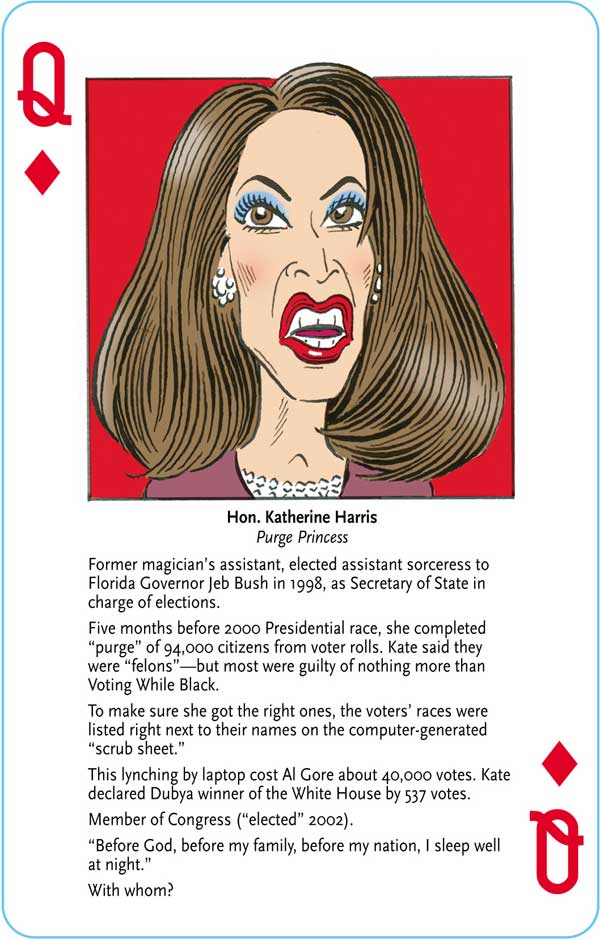
And then you have Katherine Harris:
"If you are not electing Christians, tried and true, under public scrutiny and pressure, if you're not electing Christians then in essence you are going to legislate sin. They can legislate sin. They can say that abortion is alright. They can vote to sustain gay marriage. And that will take western civilization, indeed other nations because people look to our country as one nation as under God and whenever we legislate sin and we say abortion is permissible and we say gay unions are permissible, then average citizens who are not Christians, because they don't know better, we are leading them astray and it's wrong."

When did this kind of public speech and action become ok again? Lou Dobbs bashes immigrants every day on CNN. O'Reilly is O'Reilly. The GOP is unleashing it's ugliness, and even so-called Democrats like Joe Lieberman use race-baiting as a campaign tactic.

Is it fear? Desparation? Arrogance? I'd like to think it's desparation, the GOP realizing it's got slight toe-hold on power and throwing everything they've got into keeping their base fearful and mobilized. But whatever the cause, the result is that the mask has been ripped off of a very ugly side to American politics. I hope the better angels of our natures prevail in November.

New analysis shows Democratic takeover of House likely

Raw Story.com

The latest state-by-state analysis by the Rothenberg Political Report projects a Democratic takeover of the House of Representatives, RAW STORY has learned.

In the lower house of the legislature, Rothenberg's analysis sees Democrats gaining 15-20 seats--well over the 12 needed for a House majority. Previous analysis had the gap much tighter, with Democrats' prospects for takeover hanging on just a handful of hotly contested seats.

Democrats still appear unlikely to re-take the Senate, however, with projected gains of just 3-5 seats. Of the 9 seats ranked as at least somewhat competitive, both of those leaning toward an incumbent ouster and three of the four toss-ups are currently held by Republicans. However, three Democrats are also given just a narrow advantage in their races.
Inquiry Opened Into Israeli Use of U.S. Bombs

McCain Backtracks


McCain Stresses Support for Iraq Mission
by JENNIFER TALHELM

WASHINGTON (AP) - Republican Sen. John McCain said Friday he supports the U.S. mission in Iraq days after faulting the Bush administration for misleading Americans into believing it would be "some kind of day at the beach."

The potential 2008 presidential candidate and staunch war supporter issued a statement explaining his position after his headline-grabbing comments criticizing the Bush administration.

"I have never intended my concern that the American people be fully informed about the conduct and consequences of the war to indicate any lessening of my support for our mission there," McCain said in the statement.

He complained in an appearance Tuesday about major mistakes by the administration, such as underestimating the size of the task and the sacrifices necessary. The comment prompted criticism from the right and left that McCain was flip-flopping, contradicting his backing for Bush's policy.

"Stuff happens, mission accomplished, last throes, a few dead-enders. I'm just more familiar with those statements than anyone else because it grieves me so much that we had not told the American people how tough and difficult this task would be," the Arizona senator said.

He made the comments while campaigning for Republican Sen. Mike DeWine of Ohio.

Those phrases are closely associated with top members of the Bush administration, including the president.
Bush stood below a banner proclaiming "Mission Accomplished" on May 1, 2003 after the collapse of Saddam Hussein's regime. The war has continued since then, with the death of more than 2,600 members of the U.S. military. Vice President Dick Cheney said last year that the Iraqi insurgency was "in its final throes."

In a March 2003 interview on MSNBC's "Hardball With Chris Matthews," McCain was asked whether he believed the people of Iraq would treat U.S. forces as liberators.

"Absolutely. Absolutely," the senator replied.

Democrats criticized McCain on Friday, calling him a "Monday-morning quarterback" and arguing that he should try to change Iraq policy if he disagreed with Bush's handling of the war.

"McCain's latest criticism is simply more talk without action from a presidential wannabe," said Christy Setzer, spokeswoman for the Democratic group, Senate Majority Project.

Republican consultant Rich Galen, who worked in Iraq for the Defense Department, defended McCain, saying he was giving an "accurate description of where Americans are on this war" while also making the case it is necessary in the fight against terrorism.

All the potential 2008 presidential candidates are trying to make strategic decisions about how close they need to be to Bush, said Stephen Hess, a politics expert at the Brookings Institution think tank. McCain needs Bush's support to appear presidential, but he also needs to maintain his maverick image.

"He's making adjustments," Hess said. "He's trying to adjust his position to be the most advantageous."
Prior to this week, McCain has criticized Bush's public assessments of the war.

In a November speech at the American Enterprise Institute, he cautioned that the administration must accurately portray even negative events on the ground and tell the country that it will take a long time to win.
"If we can't retain the support of the American people, we will have lost this war as soundly as if our forces were defeated on the battlefield," he said in November.

Friday, August 25, 2006

How Sorry is Andrew Young?

Anatomy of an apology.
by Timothy Noah

Andrew Young's outrageous slur against Jews, Arabs, and Koreans lost him his job as Wal-Mart's goodwill emissary, but in the days since the remarks by the former U.N. ambassador, Atlanta mayor, and aide to Martin Luther King Jr., surfaced in the Los Angeles Sentinel, a black-owned weekly serving that city's African-American population, various commentators have rushed to defend, explain, or otherwise minimize what Young said.

Among these apologists is Young himself, who since issuing an official mea culpa (reprinted, highlighted, and annotated below) has been signalling that this is all a meangingless game of racial politics at which he, a longtime civil rights leader, is, notwithstanding his momentary bêtise, a consummate player.

This cynical view is lent some credence by the depressingly predictable failure of the various groups representing Jews, Arabs, and Koreans to band together for a joint protest condemning Young's offense against all three. (An attack against one ethnic group is not, sadly, seen as an attack against all.) Instead, the Korean American Association of Greater Atlanta requested and was granted a meeting with Young, at which Young apologized for offending Korean-Americans.

The Atlanta chapter of the American Jewish Committee hopes to meet with Young as early as next week, according to the Atlanta Journal-Constitution, so Young can apologize to it for offending Jews. And Haitham M. Haddad, identified by the Journal-Constitution as "a member of the Arab-American community," is working on setting up a meeting at which Young can apologize for offending Arabs.

No word on whether the Rev. Joseph E. Lowery, who succeeded King and Ralph Abernathy as president of the Southern Christian Leadership Conference, will get a meeting too. Lowery publicly took offense at what his former colleague Young said. But as an African-American, Lowery was speaking not against bigotry toward the black community, but rather against bigotry toward three groups to which he does not belong. His charmingly old-fashioned protest, grounded not in injury but in principle, can safely be ignored.

Here is the passage from Young's interview with Yussuf Simmonds, managing editor of the Los Angeles Sentinel, that caused offense:
When asked about Wal-Mart moving into areas and displacing the "mom-and-pop" stores, Young had this response. "Well, I think they should; they ran the 'mom-and-pop' stores out of my neighborhood. But you see those are the people who have been overcharging us—selling us stale bread and bad meat and wilted vegetables. And they sold out and retired to Florida. I think they've ripped off our communities enough. First it was Jews, then it was Koreans and now it's Arabs. Very few Black folks own these stores."

Various African-American writers, including the estimable Clarence Page and Erin Aubrey Kaplan, have suggested that what Young was trying to say, in his admittedly ham-handed way, was that blacks historically have not owned the mom-and-pop stores in black neighborhoods, and that this is a source of legitimate frustration in the black community. A perfectly valid point, but not, you'll notice, the one that Young made in the interview. Young didn't say that more blacks ought to own mom-and-pop grocery stores in black neighborhoods; he said that the people who have owned and operated these stores have "been overcharging" blacks for "stale bread and bad meat and wilted vegetables" and then "sold out and retired to Florida." They have "ripped off our communities." They have done this, Young implied strongly, because they are not themselves black.

Not one iota of evidence suggests that the economic and racial exploitation Young attributes to Jews, Arabs, and Koreans has any basis in fact. Where are these Koreans who are getting rich off the stores they open up at 8 a.m. and close at 11 p.m.? Nobody's spotting them in Palm Beach, cackling over the fortunes they amassed with appalling speed. Like the Jews and Arabs who preceeded them, they are attempting to gain a tenuous footing in the middle class. They are hoping to send their children to college. If this is exploitation, one need question the competence of the exploiters, because they have paltry gains, ill-gotten or otherwise, to show for their treachery.

One can well understand how inner-city customers, who usually have even less, would come to resent the outsiders' profit margins, no matter how negligible. But Young didn't describe this resentment. He expressed it, and he made untrue accusations against specific ethnic groups to encourage it, all in the service of giving the corporation he worked for an easier time locating its megastores in low-income black neighborhoods.

In the Sentinel interview, Young said that Wal-Mart "should" displace mom-and-pop stores. No doubt he's correct that Wal-Mart can provide some of the same goods to inner-city consumers at lower prices. But that's only because Wal-Mart doesn't aspire to provide its employees a minimally decent standard of living.
(Economies of scale, of course, also lend an advantage.)

Whether the result is a net benefit to low-income blacks I leave to others to decide. But Wal-Mart's stinginess is no reason to judge harshly inner-city shop owners of any race who seek some sliver of economic security.

Warantless Wiretap Program in Doubt


by Helen Thomas

WASHINGTON - "There are no hereditary kings in America and no powers not created in the Constitution."

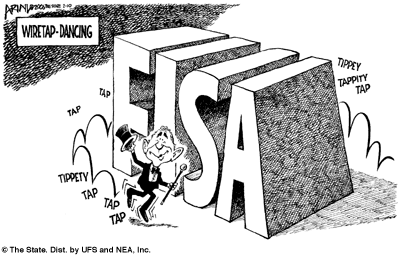
That eloquent putdown of an imperial presidency was the essence of a ruling by U.S. District Judge Anna Diggs Taylor, who declared President Bush's warrantless wiretap program was unconstitutional.

Bush secretly authorized the intercepts after the 9/11 terrorist attacks, with the stated goal of eavesdropping on international calls and e-mails by potential al-Qaida terrorists. Existence of the program was revealed by The New York Times on Dec. 16.

After Taylor's decision, Bush immediately announced he would appeal. On Monday, he told reporters, "It was a terrible opinion. ... "

The ruling was made in a lawsuit brought by the ACLU and others representing scholars and journalists.

Taylor said the government surveillance program run by the National Security Agency violates privacy and free speech rights under the Bill of Rights. She also found the telephone taps violate the 1978 Federal Intelligence Surveillance Act, which requires court approval before the government can wiretap within the U.S.

"It was never the intent of the framers (of the U.S. Constitution) to give the president such unfettered control, particularly when such actions blatantly disregard the parameters clearly enumerated in the Bill of Rights," Taylor said.

The administration argued the 2001 congressional resolution authorizing the use of force -- passed after the terrorist attacks -- gave Bush the right to create the program. But Taylor noted the congressional resolution "says nothing whatsoever of intelligence or surveillance.
"
Both sides agreed to a temporary stay of her order halting government wiretapping until a Sept. 7 hearing.

It is odd that the administration finds the FISA law so burdensome, since obtaining a warrant should be no problem even in an emergency. The record shows the special court created by FISA almost always approves requests for electronic eavesdropping. The law also allows for retroactive approval in emergencies.

The alleged plot foiled in Britain to bomb airliners bound for the U.S. undoubtedly bolsters the administration's warnings about terrorism but still does not explain why the Bush administration balks at getting a warrant to spy legally.

Taylor's arguments have been trashed by some law school professors. Even some who agreed with her bottom-line ruling took issue with her reasoning and rhetoric.

But to an average American, the ruling's beauty rests in its simplicity and the inspiration that the Constitution still prevails.

Anthony Romero, the ACLU executive director, said the ruling vindicates the notion there are limits on the scope of executive authority.

"Ultimately," Romero added, "any doubts about the decision will be taken on appeal by sitting federal judges rather than pundits or commentators."

Last February, the American Bar Association adopted a resolution calling on the president "to abide by the limitations which the Constitution imposes on a president under our system of checks and balances and respect the essential roles of the Congress and the judicial branch in ensuring that our national security is protected in a manner consistent with constitutional guarantees."

The ABA urged the president to seek appropriate legislation, rather than act outside the law, if he feels the existing legal framework is somehow lacking.

The ABA also noted that the Watergate scandal in the Nixon administration revealed abuses of government wiretapping. This led a Senate committee to recommend legislation to provide the government with needed authority to conduct surveillance to protect national security but also to protect against abuses of that authority.

The result was the 1978 law creating the FISA court.

The Taylor decision is expected to face tough going before the conservative U.S. 6th Circuit Court of Appeals and the U.S. Supreme Court.

Let's hope the higher courts do not allow the president to break the law.

Bringing "Dignity" Back to the White House


Oilman Bush has gas in background
By Margery Eagan
Boston Herald Columnist

Maybe if Iraq were going better, I’d chalk this up to some cowboy thing.“Blazing Saddles Does D.C.”

As it is, I worry that the supposed leader of the free world is trapped in the body of a 7-year-old and hiding a Whoopie Cushion under his bed.

Has Dubya lost it?

Anyway, here’s the news, such as it is. U.S. New & World Reports’ Paul Bedard says our commander in chief “loves flatulence jokes . . . can’t get enough of fart jokes. He’s also known to cut a few for laughs, especially when greeting new young aides.”

In an interview yesterday, Bedard, who writes “Washington Whispers” for the weekly newsmagazine, also said he’s heard about Bush’s full-salute “Austin Greeting.” That’s when new aides come in for their “meet and greet.”

“Word is,” says Bedard, “he likes to gas a couple, and then bring the aide in and see what the kid’s face looks like.”

Naturally, the aide can’t accuse the President or grimace or hold his nose. This dilemma apparently drives the presidential funny bone wild.

So does this mean our president farts on command?

“It’s all in what you eat, I guess . . . beans, nachos,” Bedard told me yesterday.

Does he do this with Cheney, Rummy and Rove?

“You mean the old farts?” says Bedard. “I like to think so.”

OK, almost no one I talked to yesterday shared my reaction to all this, which is, gross, gross, gross. Can you even envision Mitt Romney? John Kerry? Te-ray-za?

Imagine the scene with Bush. Some nervous, excited and unsuspecting 25-year-old - male, let’s hope - is about to shake hands with the most powerful man on earth, and then, well, George makes his own unique contribution to global warming.

As for the scene with Cheney et. al? Oh, banish it from the brain!

Yet most everybody else said this reveals George as a regular guy.

Then they made jokes. “Dyslexia rears its ugly head,” said Becky Swope. “He’s not a frat boy!”

“He’s just ringing the Taco Bell!” said Jeff, who owns a pet store in Salem and didn’t want his last name used, for obvious reasons.

We’ll protect, too, my sober, downtown law firm friend Stephen, lest he get fired: “As a new young intern in the White House, which would you rather have the president say, ‘Pull my finger,’ or ‘Have a cigar?’ ”

That’s my point. Gross.

So too the bodily habits of previous presidents, most notably Lyndon Johnson, who scratched his crotch at Cabinet meetings, held other meetings while sitting on the toilet and pulled up his shirt to display an ample stomach surgery scar.

I did not know this until yesterday. (I wish I still didn’t know it.) Harry Truman publicly belched and passed gas. Bess, how could you allow it!

But when you add up all Dubya’s shenanigans, he’s already beaten his predecessors by a Texas mile. Just last month he sneak-attacked German chancellor Angela Merkel, delivering an unwanted neck and back rub in the midst of the staid Group of Eight Summit.

Every time he’s close to bald-head strangers, he starts rubbing their head. What’s that about? He’s big into “noogies” as well.

Maybe this is a gender thing. Several men, but no women, told me they remember sitting around with buddies having loudest bodily function contests when they were young. The key word there, however, is “young.”

But this latest leak from the Bush White House does explain a lot, doesn’t it? All those furrowed brows and deer-in-the-headlights pauses in his speeches and press conferences. And that devilish litle laugh.

Now we know: something else could be going on there. I’ll never look at George again without wondering.

Senator Allen Not Just A "Racist"

He also Dislikes Hispanics and Gays

BBSNews 2006-08-24 -- Senator George Allen, Republican from Virgina is making worldwide news with his clearly racist remark about a rival campaign staffer who has been shadowing Allen as he makes various appearances and gaffs. The Tribune of India wrote:

"President George W. Bush has no qualms about attending a political fundraiser for a Virginia Senator who recently used a racial slur against a young American..."

Apparently the president sees no problem raising money for an old time southern racist. Shame on him.

Senator Allen called a young man named S.R. Sidarth, of Indian descent a "macaca".

He claims that it was totally innocent. But this is a man already known for having a penchant for the confederate battle flag, and some reports claim that he likes to refer to black folks as the "n" word. His "apology" was hollow given that everyone who knows about that slur macaca and Allen's history will have a hard time swallowing his late and very transparent contrition. It took after all twelve days for the political reality to set in. He should be "Trent Lotted" for his shameless racism.

Watching the video of Allen is a case study in human behavior. It shows just how out of touch with reality that those in power get when they believe they have unwavering support from other bigots and racists.

Allen is also bigoted towards other Americans and immigrants

Today in Virginia Sentor Allen got some rousing applause for some more bigotry. This time towards hispanic immigrants and gay folks.

The state of Virginia already has a sordid and racist past. Not the least of which is the case of Loving v. Virginia. A 1967 Supreme Court case that struck down a Virginia law that prevented white folks from marrying black folks and vice versa. A extremely bigoted judge in that case was so Taliban like in his religious beliefs that he banished a couple from the state of Virginia, using wholly insulting language and biblical narrative to make the couple either leave the state for a period of 25 years or go to prison.

One of Allens's applause lines today in Springfield, Virginia came from his audience when he declared his support for an amendment against gay marriage, which is directly akin to the previous Virgina laws about inter-racial marriage. Bible based bigotry against a class of people that will one day be struck down just like Virginia v. Loving.

Then he voiced support for a "physical fence" on the border of Mexico bolstered by a "virtual" fence and of course more prisons to lock up people; this time just people seeking a better life. The Fairfax County Times reported:


"Allen said he favors a physical fence across the border with Mexico, as well as a "virtual" one of sensors and cameras. He also said more detention centers should be built to hold illegal aliens awaiting deportation."

This clearly bigoted and morally suspect person should be voted out of office. His opponent Democrat James Webb should highlight all of these reasons and more why George Allen is simply not fit to be a senator in a land that cherishes the equal rights of all Americans and not just a select GOP few.

http://iraqforsale.org/

McCarthyism: From 1946 to 2006

by John Nichols


Primary elections always matter. But some primary elections matter more than others; indeed, some primary elections define the character not just of a particular official's term, or even of a legislative or congressional session, but of the nation's politics for years to come.

Residents of the state of Wisconsin, where my family has resided for seven generations, know this better than the citizens of most states. Sixty years ago this month, Republican primary voters turned out one of the greatest senators in the history of the United States, Robert M. La Follette Jr., and replaced him with one of the lousiest excuses for an elected leader this country has ever produced, Joe McCarthy.

The Wisconsin Republican Senate primary of 1946 set the wheels in motion for the Red Scare of the 1950s, to which McCarthy lent his name and his sordid tactics. It is true that Richard Nixon and others would have ginned up some sort of anti-communist propaganda campaign, but it is doubtful that it would ever have done the damage to civil liberties and public life that McCarthy achieved with his unparalleled lies and cruelty.

That Republican primary also began the long descent of the Grand Old Party, which had once laid a far stronger claim than the Democratic Party to the progressive mantle, into the pit of petty bigotry, reaction and neoconservative fantasy that now defines it.

La Follette lost by only 5,000 votes in August, 1946, but the margin did not matter. With the defeat of the maverick senator, who had supported extension of Roosevelt's New Deal at home while wisely questioning schemes for post-World War II military adventures abroad, the era of the old-school Midwestern progressivism came to a close. And American politics entered a dramatically uglier and more irrational period from which it has yet to fully emerge.

If anyone doubts this, consider the recent editorial attack on Ned Lamont, the mainstream liberal who defeated U.S. Sen. Joe Lieberman in Connecticut's Aug. 8 Democratic primary, by the conservative Waterbury Republican-American newspaper.

Entitled "Ned Lamont's True Colors," the Sunday editorial in one of Connecticut's larger daily newspapers was classic McCarthyism. "Red Ned may label himself a progressive, but when he espouses goals shared by Marx, Lenin, Stalin, Castro, et al., he gives away his true color," wrote the paper's editors of Lamont, a successful businessman who espouses views no more radical than those of U.S. Sen. Russ Feingold, D-Wis., and dozens of other House and Senate members including a few anti-war Republicans.

The newspaper alleged that "(Lamont) has surrounded himself with people who may be characterized fairly as dedicated socialists and borderline communists," when in fact Lamont's primary supporters were grass-roots Democrats who were frustrated with Lieberman's allegiance to the Bush administration's failed foreign policy.

The Republican-American editorial also claimed that "liberal journalists adore (Lamont) because they share his world view on abortion, homosexual marriage, universal health care, racial quotas, loopy environmentalism and especially the war against Islamic terrorism. They are blood brothers, or more accurately, fellow travelers. Just as journalism has become a hornet's nest of socialism (communism not yet perfected), if you shake Lamont's family tree, a lot of Red apples will fall."

Spouting innuendo and inaccuracy with abandon, the newspaper sought to claim that Lamont's blue-blood family including J.P. Morgan's partner, Thomas Lamont, and civil libertarian Corliss Lamont was nothing less than Stalin's fifth column in the United States. The paper conveniently forgot to mention that Corliss Lamont, though certainly a man of the left, authored a much-noted tract titled "Why I Am Not a Communist."

While the Republican-American may be guilty of lax journalism, the real shame belongs to Lieberman's independent campaign, which has spread the Waterbury paper's fantastic claims. The senator's communications director even quoted the editorial in a widely circulated statement on the race.

With the help of the Waterbury Republican-American, Joe Lieberman is keeping alive the politics of another Joe: the one named McCarthy. And in so doing, Lieberman's proving that the shock waves from a primary election in the summer of 1946 are still being felt in this summer of another primary election that has dislodged another senior senator.

Pluto No Longer A Planet


Pluto gets the boot

Leading astronomers declared Thursday that Pluto is no longer a planet under historic new guidelines that downsize the solar system from nine planets to eight. After a tumultuous week of clashing over the essence of the cosmos, the International Astronomical Union stripped Pluto of the planetary status it has held since its discovery in 1930.
FULL STORY

Twenty-first Century Rome

by Gary Hart

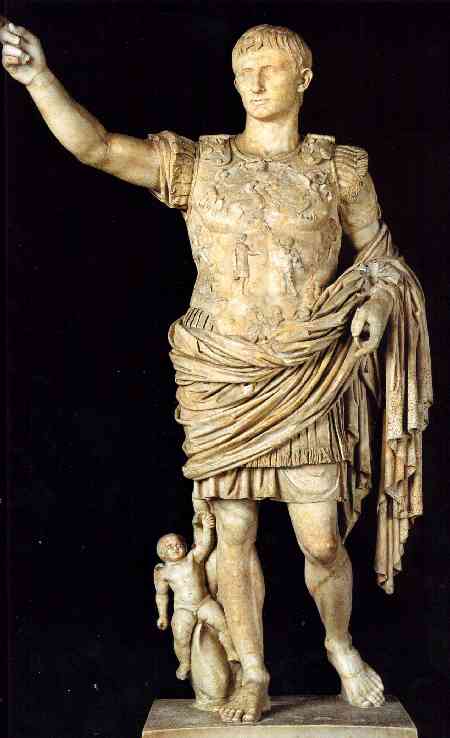
For those of us who believe history holds valuable lessons, there is instruction to be had from the experience of other great powers. In the particular case of the American Republic it is important to consider the history of other republics. Not the least of these examples is the demise of the ancient Roman Republic and its transition to the Roman Empire.

That history is well known. The civil wars of the mid-first century BC led to the acquisition of dictatorial power by Julius Caesar lasting from about 49 BC until his assassination on the Ides of March 44 BC. Further unrest if not chaos ensued until, in 27 BC, Caesar’s adopted son Octavianus became the first Roman emperor as the first Augustus.

So much for the dates and names. The question is how Augustus became emperor. How did he go about finally ending a republic founded in 510 BC?
First, “he took steps to neutralize the army as a political force.” Of course, in a republic that would be a good thing, because in republican Rome the armies as political forces had helped bring about the demise of the Republic.

But in Augustus’s case he achieved his objective by making the army his instrument. Control of the army was control of state power.

Second, he took control of the system of laws and justice. Little could happen with the magistrates and judges that did not meet his approval and conform to his policies. To control the legal system was to control the entire nation.

And, third, like his adoptive father Caesar, Augustus was “imaginative and innovative in his exploitation of religious sentiments.” Augustus understood that the integration of the state with religion was the key to control of the nation’s culture.

The army, the courts, and religion. The keys to the creation of the Roman Empire.

In 21st century America the current government (the presidency and Congress of one party) has taken control not only of defense and military policy, but also military operations. No other administration, including that of Abraham Lincoln during the Civil War or Franklin Roosevelt in World War II, has ever done that. The unprecedented imposition of neoconservative ideology on military operations has led directly and inevitably to the debacle in Iraq.

In the last five years we have seen an effort by the current government to control the American judicial system by the appointment of ideologically selected judges. The unprecedented attempt to make the administration of justice the instrument of ideology is incompatible with the Constitution of the Republic whose flag we salute.

And, of course, the Republican party has been imaginative and innovative in its exploitation of religious sentiments. The unprecedented submission of social policy, and foreign policy in the Middle East, to religious fundamentalists violates the First Amendment to the U.S. Constitution and has weakened America in the world.

The army, the courts, and religion. The keys to the creation of the American Empire.

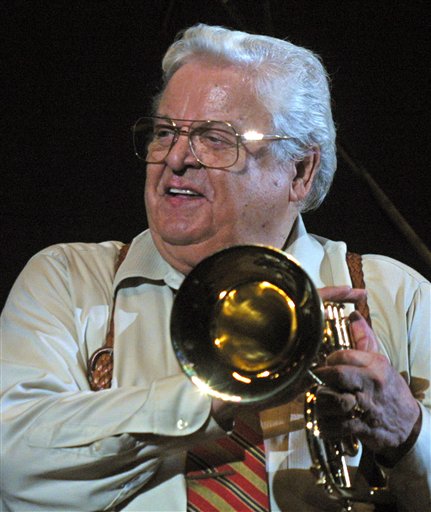
Maynard Ferguson Is Dead

by John Seery

Jazz trumpeter Maynard Ferguson died last night, at age 78. His manager Steve Schankman said about Maynard's passing: "Someone just said, 'Gabriel, move over to second trumpet.' He was the last of the greats. That era is closed. There is no Kenton, no Basie, no Ellington, and now, no Ferguson."

Why should there be a tribute to a jazz trumpeter on a website devoted mostly to political commentary?

Here's one possible answer. But I simply must confess that Maynard was one of my heroes, and not merely because he could blow a mean trumpet. He wasn't simply a charismatic stage performer, though he certainly was that. Rather, throughout his 50+ year career he used his musical gifts to help draw together small communities all across America. Call that Tocquevillean.

Hitting that beat perfectly, Schankman explained: "He will be remembered for his soaring high notes, he'll be remembered as Stan Kenton's lead trumpet player and he'll be remembered for movie soundtracks like 'The Ten Commandments.' But what they should remember him for is his work as an educator. He played for students, visiting high schools, to raise money for instruments and music programs. And he left them with an inspiring remark."

That's exactly right, that's exactly how I remember him. Maynard took his big band into high school auditoria and out-of-the-way venues all across this country, year in year out, and he spent a great deal of time conducting teaching clinics with junior high and high school kids. He made jazz dynamic and palpable. His trumpet was a wake-up call for nothing less than life itself.

To Iran With Love

From the botched Iraq war to threatening Iran with "regime change," neoconservative policies have been a boon for Tehran.

By Joe Conason

If the neoconservatives were not so adept at claiming the patriotic high ground for themselves -- and convincing the nation that they are interested only in advancing the security of America and Israel and the cause of democracy -- it might be time to start asking which of them are actually agents of Iran. The question is pertinent because "objectively," as they like to say, neoconservative policy has resulted in enormous profit to the Iranian mullahs, at grave cost to the United States and with little or no benefit to Israel.

The most obvious example, of course, is the American invasion and occupation of Iraq, which has conveniently eliminated Iran's chief military rival in the region, and replaced Saddam Hussein's Baathist regime with a weak government dominated by Shiite Islamist parties friendly to Tehran. The only certain outcome of our misbegotten effort is that the Iranians have finally gotten what they could not achieve during eight years of war with Iraq, despite the sacrifice of hundreds of thousands of lives and hundreds of millions of dollars. And we delivered the prize to them at no cost -- except what we have lost in thousands of dead and wounded U.S. troops and hundreds of billions of dollars.

Oddly enough, they don't seem any more grateful than the Iraqis.

Remember that the war's chief instigator, aside from the neoconservatives themselves, was their friend and collaborator Ahmed Chalabi, who has since proved to be a more reliable ally of the Iranians than of his former American sponsors. With much help from domestic propagandists, Chalabi oversaw dissemination of the disinformation about Saddam's "weapons of mass destruction" that served as the rationale for war. The original neocon plan was to enthrone him in Baghdad as a strongman ruler, at least on a temporary basis. He had promised, among other things, that the new Iraq would grant diplomatic recognition to Israel. Things haven't quite worked out that way.

Could the neocons truly have been so dense and clueless about the consequences of an American invasion of Iraq? Not if one believes their constant flattery of their own seriousness and sagacity. They did do an excellent job of misleading the American public about how the war would proceed, from their promises that the costs would be underwritten by Iraqi oil, to their predictions that a "new democratic Iraq" would radically improve the prospects for regional peace and progress, to their assurances that Shiite domination would prove benign.

William Kristol, the Weekly Standard editor whose magazine so assiduously promoted war, brushed aside any concerns about empowering the Shiites during an April 2003 interview with National Public Radio's Terry Gross:
"And on this issue of the Shia in Iraq, I think there's been a certain amount of, frankly, Terry, a kind of pop sociology in America that, you know, somehow the Shia can't get along with the Sunni and the Shia in Iraq just want to establish some kind of Islamic fundamentalist regime. There's almost no evidence of that at all. Iraq's always been very secular."

For a man who by then had spent almost 10 years arguing for war in Iraq, he was either stunningly ignorant or intentionally deceptive.

It would be easier to believe that Kristol and his fellow war enthusiasts were merely misinformed or stupid if all of their mistakes did not so consistently benefit Tehran. But consider the results of the policies pursued by the White House at their insistence.

By constantly threatening Iran and proclaiming a policy of "regime change" that may someday be imposed militarily, the Bush administration has gravely weakened the domestic opposition to the mullahs. This loud, clumsy approach has made the U.S. so unpopular among the Iranian people that exile groups seeking democratic reform dare not identify themselves with us. Actually, the excessive belligerence of the neoconservatives is a great boon to the otherwise unpopular mullahs, creating an external threat that unites the Iranians and distracts from their domestic misery. And the threat of an attack by the United States has given Tehran an excellent reason to continue seeking a nuclear deterrent.

In the same vein, Tehran profited from the original Bush policy of refusing to negotiate with Iran over its nuclear ambitions, which divided the United States from its traditional allies in Europe and allowed the mullahs to play Russia and China off against the West. Indeed, the overarching Bush policy of breaking apart our alliances and acting unilaterally has aided all of our adversaries, especially Tehran, by dividing and weakening us. (See Iraq war, above.) Meanwhile, the failure to unite the world behind sanctions much sooner has allowed Iran to accelerate its nuclear program.

The Iranians have also enjoyed the fruits of an incredibly reckless decision by the Bush administration -- again encouraged by the neoconservatives -- to back Israel's bombardment of Lebanon. Tehran's friends in Hezbollah are now the toast of the Arab world, and they are well on their way to destabilizing Iran's enemies (and America's allies), destroying any chance to revive the peace process, and radicalizing Muslims around the world. What benefit, if any, the U.S. or Israel derived from this latest misadventure is hard to see.

At still another level of policy, the Bush administration has fought to prevent the imposition of automobile fuel economy standards or other conservation measures that would begin to free us from Iranian threats to withhold oil. While the White House occasionally pretends to be interested in new energy technologies, the government has done little or nothing to pursue real energy independence. But then, that is simply the inevitable result of electing George W. Bush as president, a failed oilman more concerned with chopping brush and making fart jokes than foreign policy.

And then there's Dick Cheney, the real author of these disastrous policies. It is the vice president who has provided the bureaucratic muscle behind the neoconservatives, whose patronage he has long enjoyed at the American Enterprise Institute. Cheney too has a curious history with Iran, as the former chief executive of Halliburton, a company that blithely and repeatedly violated U.S. sanctions against Iran through foreign subsidiaries. As a congressman, Cheney was also the most outspoken apologist for the secret arms trading with the Iranian mullahs, despite their record of supporting terrorism against American troops, that almost brought down the Reagan administration.

But Cheney is an opponent of Tehran, as are his comrades at the Weekly Standard, in the Pentagon and elsewhere in the ranks of neoconservatism. They aren't secretly trying to give aid and comfort to Tehran.

It only looks that way.

Blog Archive